By Kym Dunbar
First Lake Argyle public swim
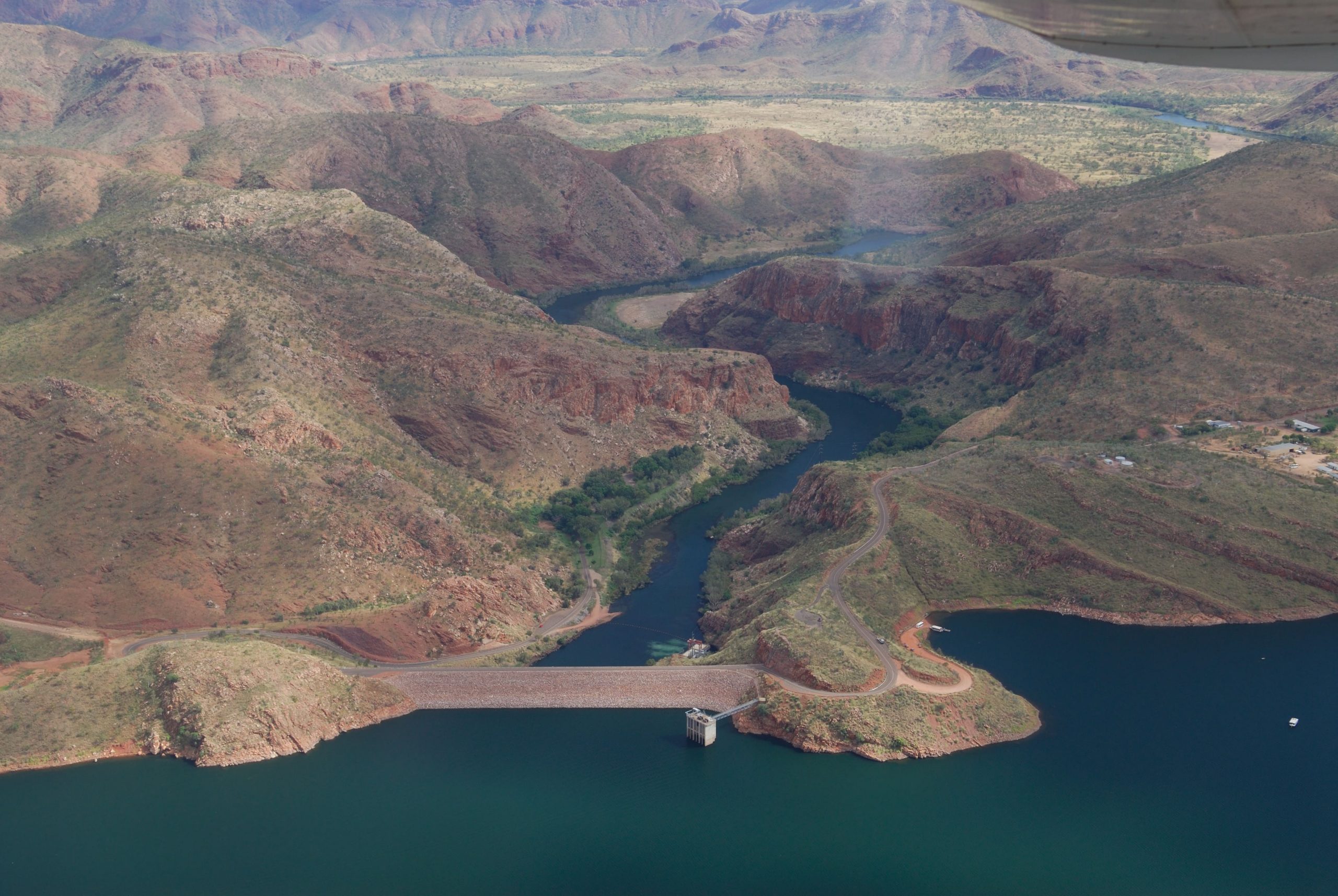
After the success of the inaugural Patsy Durack Memorial Marathon Swim in 2006, the challenge was to organise the first public swim in one of Australia’s largest bodies of fresh water. Kieran Kelly, who was instrumental in organising the first swim across the lake the year before pitched the idea to Kununurra local Jim Hughes on the last day of the previous swim as they approached the dam wall.
Jim was sceptical. The logistics of getting swimmers, boats, and paddlers safely round a remote course in the Kimberley were daunting. Kieran was conscious that, despite the experience in doing long-distance swims of the team he had brought to the lake the previous year, a public swim would be a challenge for the locals.
“One of Jim’s deepest reservations was getting people to show up. He was rightly concerned that if the Kununurra community got behind a public swim and no one showed up it would be enormously embarrassing,” Kieran said. “I felt for Jim.
He had been so helpful in organising the first swim and now we were asking him to do it over again. Nevertheless, he was underestimating the popularity of long-distance swimming in the eastern states and I was confident of organising a significant crew who would jump at a chance like this.”
“At the back of my mind was the success of the Rottnest Swim in Perth. If they can run a swim down there, I thought we can run a swim up here.”. It was obvious that, to make a public swim happen, Jim Hughes would have to be convinced and Jim would then have to convince the wider Kununurra community that backing the swim was worth the risk.
In late 2006 Jim and Kieran spent hours on the phone thrashing out a plan for a public swim which they hoped would become an annual event. Numerous hurdles were apparent.
Sorting out the logistics
The first issue was the number of boats available to support the swimmers. If there was only a limited number of boats it would constrain the number of teams that could enter the event.
“To begin with, Jim didn’t think we could get any more than 20 boats. This meant we could not have more than 20 teams,” Kieran said.
Jim also worried about getting enough people to enter. He thought there would not be 20 teams from the locals, so during one phone conversation explained that the Kununurra Chamber of Commerce and Industry (KCCI) would not lend its support unless Kieran would guarantee a minimum number of his friends entering.
A swim takes shape
As they started solving the issues, it turned out that Jim could get more boats than he thought.
“We had been treading water when Jim phoned and said he may get enough boats to support 50 teams. This was great news but he still wanted to know how many teams I would commit to. He admitted this was critical for the KCCI.”
At this point, Jim enlisted the help of KCCI board member and Kununurra real estate agent, Brad Williams. Brad became our go-to person and supporter on the KCCI. His work and input not only helped establish the first public swim but, unknown to us, he would have an ongoing association extending more than a decade into the future.
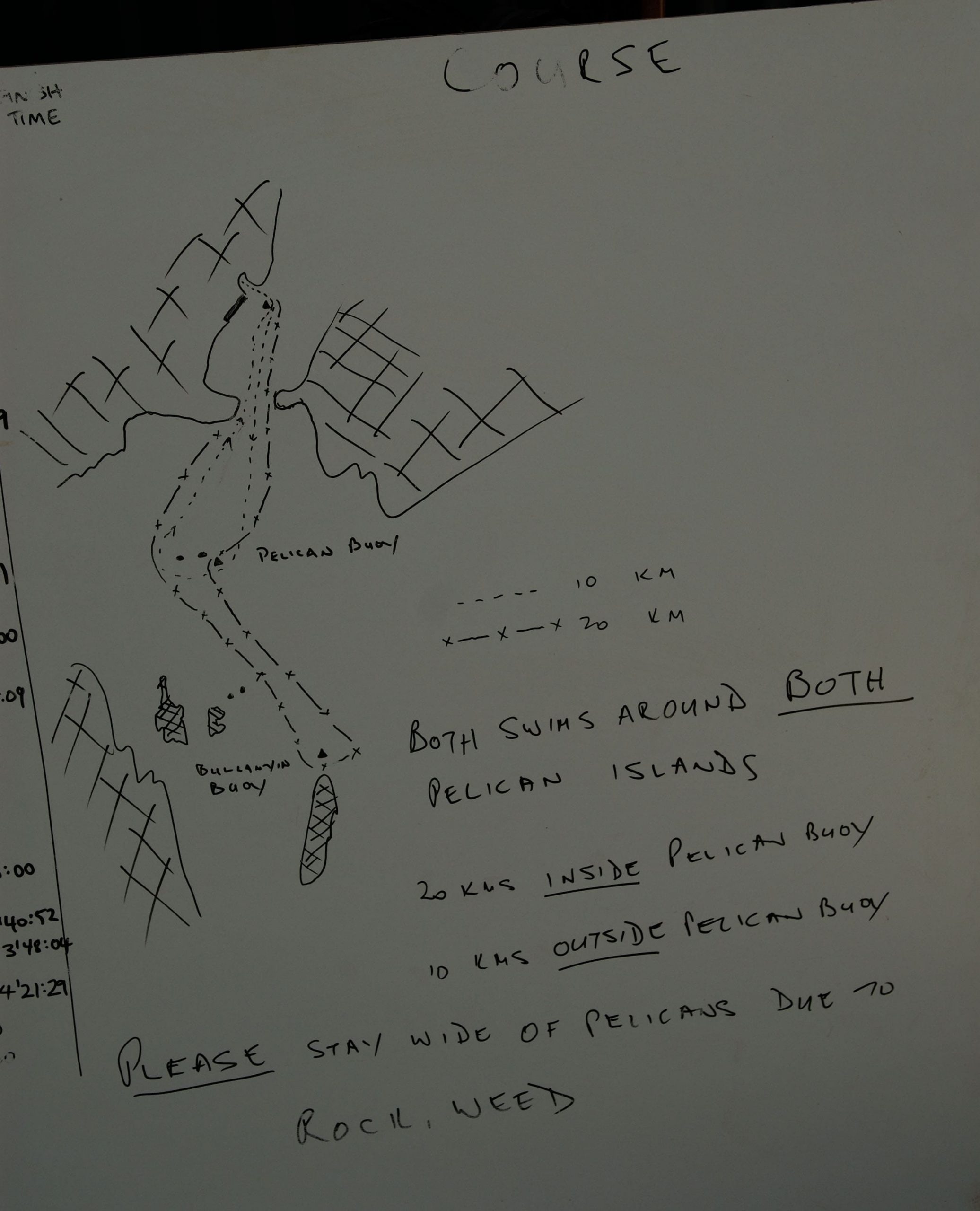
For the public swim, Jim and Kieran planned divisions comprising single swimmers, and teams of duos and quads. Swimmers could choose from courses of 10 or 20 km.
With many of the problems slowly finding solutions numbers still remained a stumbling block. Jim said the KCCI was adamant it would only give the go ahead if Kieran underwrote 20 swimmers.
“This wasn’t as difficult for me as it sounds. I knew that members of the Balmoral Beach Club (BBC) would jump at something like this. Biting the bullet, I sent Jim a letter guaranteeing that I would bring 20 swimmers but only if Jim guaranteed 20 boats.”
“I did not have access to boats or drivers and would be totally relying on Jim. Getting drivers was another issue but he never faltered the previous year and I had no reason to believe he would let us down.”
Jim was told that if the BBC brought 20 swimmers to Kununurra, none would want to drive a boat meaning he had to organise the boats and volunteer drivers for an all-day commitment. Jim was also told that he would also have to arrange kayak paddlers for the singles and duos. It is difficult for swimmers in long-distance events who can’t see the horizon to steer. There was silence when he was told this but finally answered ‘OK’. “Nothing fazed Jim Hughes.”
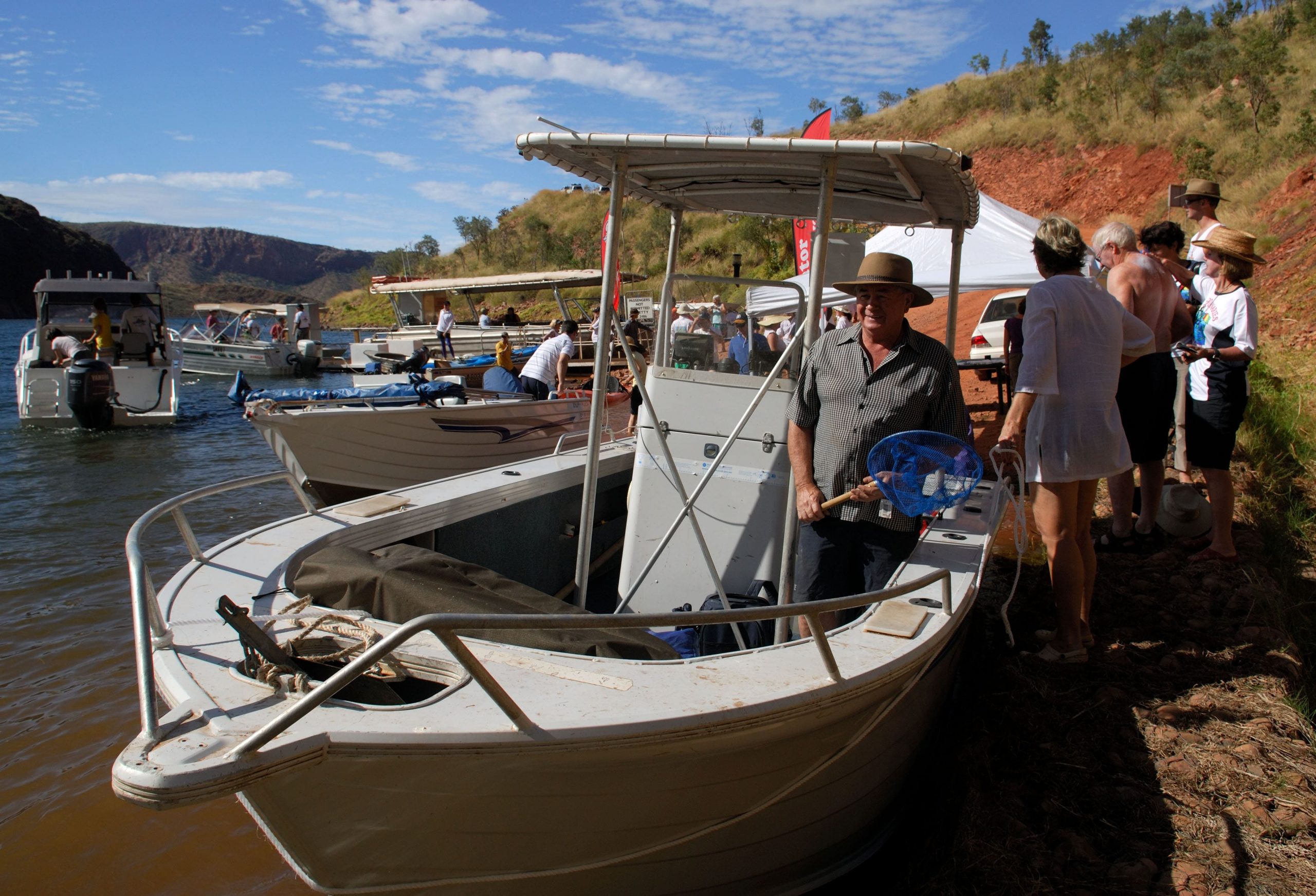
For the first public swim, everyone had a boat and a kayak, because of safety concerns the navigational challenges in the middle of the lake. It was a huge effort to get the number of kayak paddlers and boats.
Later Jim said he was surprised Kieran committed to 20 swimmers on the spot and even more surprised how quickly the team list was compiled. He said later how the underwriting of the first swim by the BBC was the most important factor in getting it off the ground.
It was clear that none of the parties concerned, including Kieran and Jim, the many sponsors involved, and particularly the KCCI, would get involved unless there was adequate insurance around the undertaking.
“This is where our experience at the BBC, running swims overseas, came in handy. We had years of experience putting together insurance coverage for this sort of thing.”
Crocodile threat or not?
The issue about saltwater crocodiles that arose in the first swim inevitably came up again, especially from the insurers. One suggested an exclusion clause for crocodile attack. This raised the question of how to design the swim course. The KCCI wanted the swim course in the northern end of the lake, as they believed there was no chance of crocodile attack there.
“Once more I was conscious of the responsibility. I had invited many of my friends from Sydney and there would be members of the public involved. They were entitled to assume that the swim would be safe.”
“If this was going to turn into an annual event, this question had to be definitively answered.”
Kieran went back to Professor Harry Messel at Sydney University who had advised him the previous year. He was assisted in this connection by Professor Geraldine Hunt who had been a member of the previous year’s swim team and was a colleague of Messel’s at Sydney University.
Messel thought it inevitable that some saltwater crocodiles survived the building of the dam but there would not be any in the deep water near the dam wall. Messel believed that as saltwater crocodiles breed in fresh water, any remnant surviving population would occur upstream in the Ord River before it flows into Lake Argyle.
Messel said the only way to know for sure was to have a look and that he would be really interested to uncover definitive evidence of saltwater crocodile survival in the Ord.
One of the things Messel explained, which was subsequently confirmed by professional crocodile shooter, Clifton ‘Blue’ Pugh, was that the lake filled up more quickly than anticipated. It buried the old Durack homestead before they had time to remove the tractors, machinery and other plant before rising waters flooded everything. Planners thought it would take years to fill, but it took only three years because of high levels of rainfall.
Messel advised that crocodiles, either freshwater or saltwater, would be visible on the banks of the river.
“It sounded like a great adventure and, as a lifelong conservationist, I couldn’t resist the chance to see if this species had survived,” Kieran said.
“I organised permits to kayak down the Negri river from its headwaters in the Northern Territory to its junction with the Ord River near the Bungle Bungle and from there across Lake Argyle to the dam wall.”
“I pitched the idea to friend and professional photographer, Andrew Gregory – someone I trusted implicitly, to do the kayak trip and as an added bonus photograph the first public swim. He jumped at the chance.”
“For me the kayak trip and public swim went hand in hand. I was not going to support the second swim unless I knew it was safe.”
River system adventure in search of crocodiles
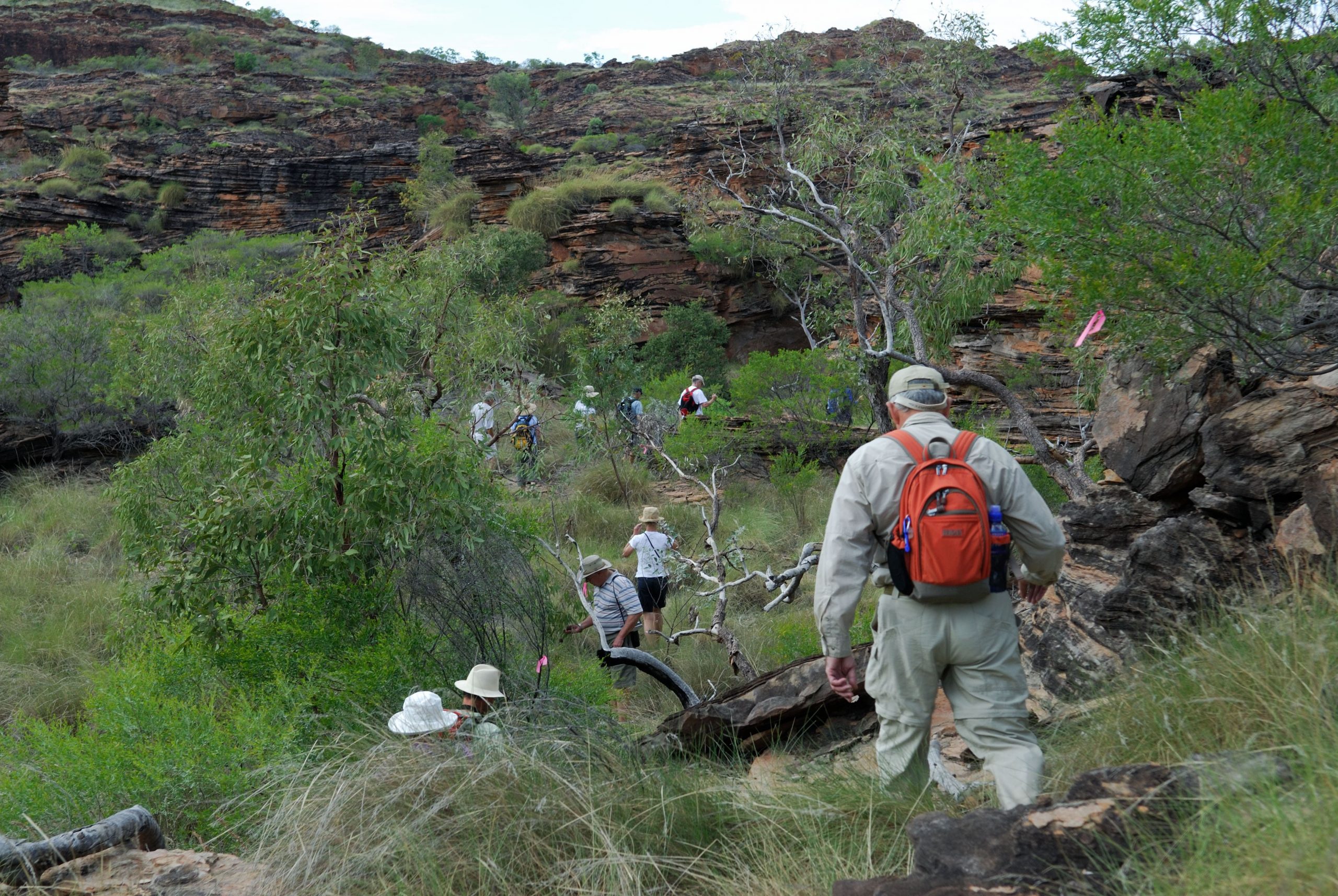
Before the first Lake Argyle public swim, Kieran and Andrew kayaked down the Negri and Ord River systems to the dam wall, becoming the first known paddlers to travel this remote river system from the Negri headwaters.
The 200 km, 10-day expedition, sponsored by National Geographic, was not only looking for saltwater crocodiles but also for evidence of cane toads invading from the east.
Andrew and Kieran believed that the Lake Argyle headwaters were one of the last tropical wetlands without a toad invasion. Cane toads would spell an end to the birdlife and other wildlife in the area. Being told subsequently that there was no sign of them at all throughout the trip was a relief to the conservationists at Kununurra.
According to Kieran the trip was an opportunity to do something never done before and for Andrew to take the first photos of the Negri-Ord river system.
The pair had to live out of kayaks for 10 days which was not always easy. They encountered rocky river-bars and waterfalls, that were tricky to navigate. Also, the weather was not always in their favour. They planned to only paddle for five days down the river and then spend four days sailing across the lake, but they found themselves heading into a strong north wind which meant paddling for nine days and only one day sailing. It was hard going most of the way.
Each night the pair camped on the riverbank. The environment was dry, desert country which changed into marshy wetlands closer to the lake.
“It reminded me of the Florida Everglades,” Kieran said.
It was on the approach to the northern edge of Lake Argyle that they saw the only two saltwater crocodiles of the journey. They were large, mature animals. It was impossible to tell if they had survived the building of the dam wall or were born afterwards. After sighting the crocs they became wary about where they camped.
“In the end, we took a calculated risk and camped on the riverbank, well back from the water,” Kieran said.
They saw large numbers of freshwater crocodiles, counting 72 in the two rivers, including a four-metre specimen that hit Kieran’s kayak, lifting it out of the water and surprising him with its strength.
“The freshies are not being eaten by the salties so their numbers have exploded. Messel expected this as they now have no predators. The freshies are relatively harmless; it’s the big salties you have to worry about.”
“The trip allayed my fears about saltwater crocodiles endangering swimmers, although I was not able to answer a curiosity about whether they had continued to breed further upstream.”
Mounting the plaque
An interesting highlight to the kayak trip was a visit to Flying Fox Knoll where the swim began in 2006. The Balmoral Beach Club group had left a note encased in a beer can under a small pile of stones at the site and Kieran was keen to leave a more enduring memento of the previous year’s record-breaking swim. He had organised an engraved brass plate replicating the handwritten note and brought a chisel,, hammer, and some fixing glue to attached it to the rock on Flying Fox Knoll.
Taking a break from the long paddle towards the dam wall they managed to find the can with the small note still inside but a little the worse for wear after a year in the weather and a fire passing through. The attachments to the rock were made and the plaque left in the remote stillness of the Carr Boyd Range.
When interviewed in 2022, Kieran said that he often wonders if it is still there and how it has fared in the 14 years since he last saw it.
Kununurra Dreamtime – the public swim becomes a reality
“Once Andrew and I had completed the kayak trip I was satisfied that I had done everything possible to ensure that it was safe to hold a swim in the northern section of Lake Argyle with no crocodile risk to swimmers.”
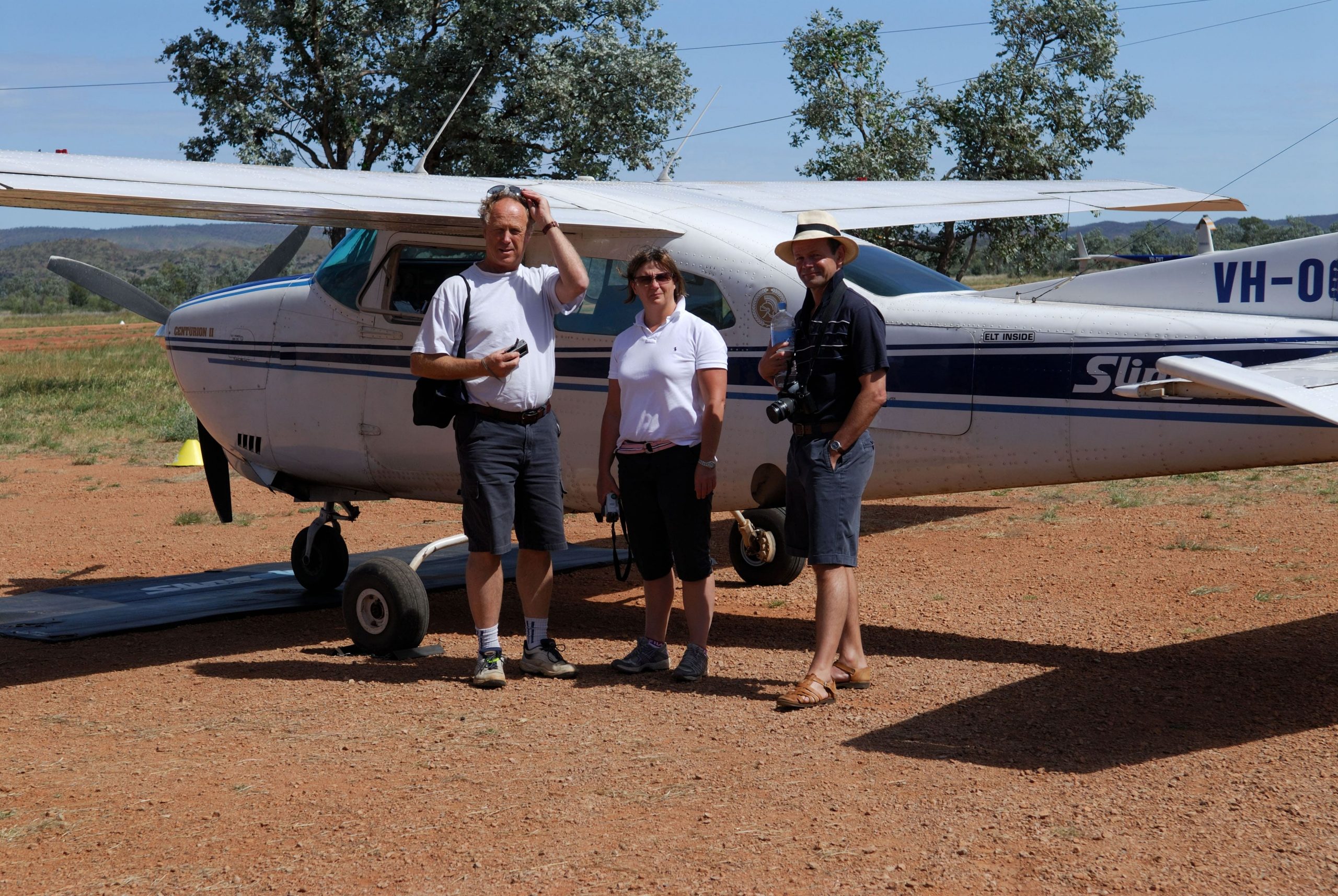
“For me the relief of the crocodile survey was matched by the number of swimmers from among my Sydney friends who participated. I made the commitment to Jim Hughes and Brad Williams that I would bring 20 swimmers and eventually 31 arrived so I felt I had held up my end of the bargain. Jim and Brad had really put their shoulders to the wheel and it was a great relief to see all those familiar Sydney faces emerging from the plane at Kununurra airport,” Kieran said.
“Four of the six pioneering swimmers from the previous year backed up for another go.” Entering a team called Sooty Grunters, named after the iconic local Black Brim (Hephaestus fuliginosus), the won the 20km quad division.
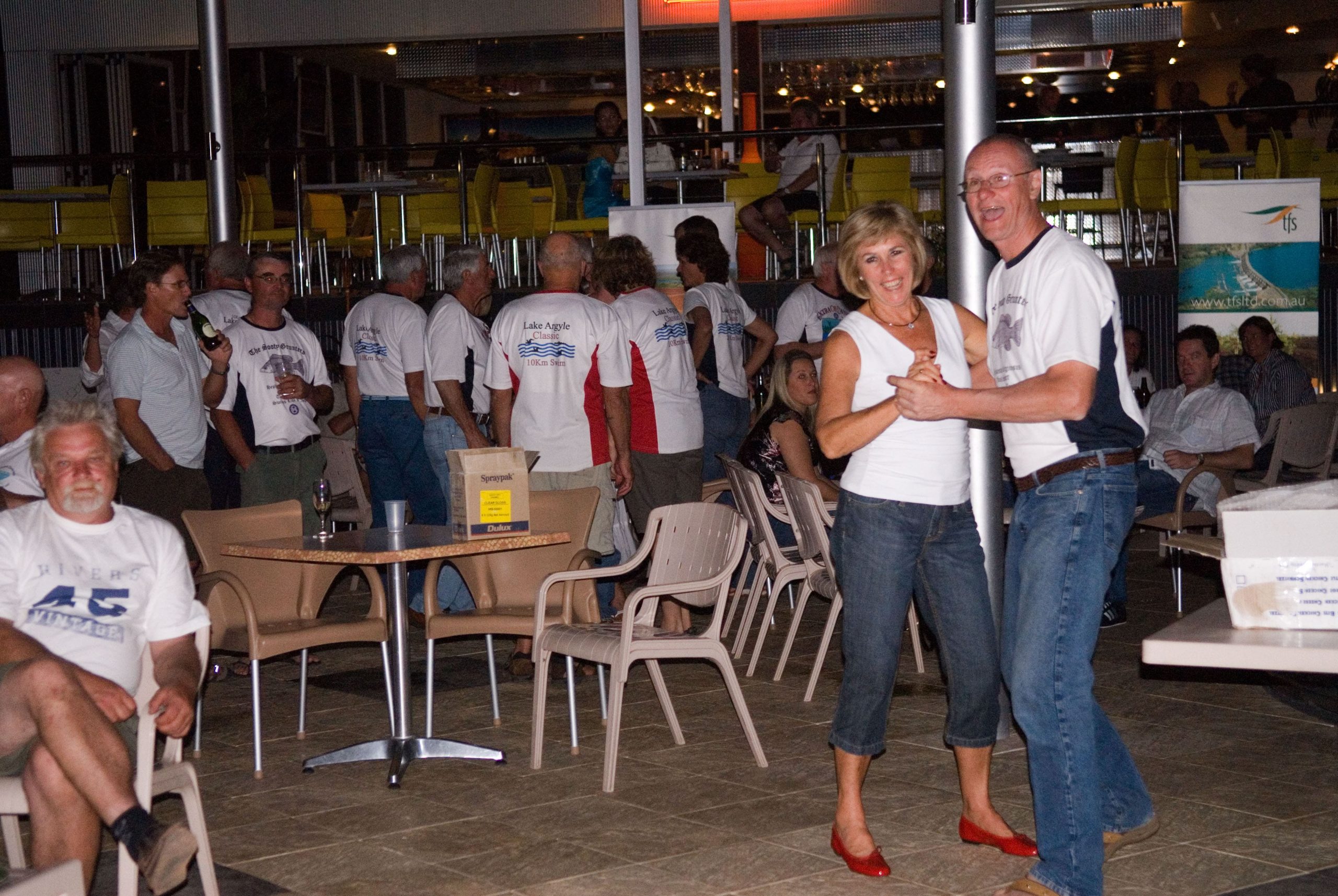
The Balmoral Beach Club newsletter captures the mood of swimmers attending the event.
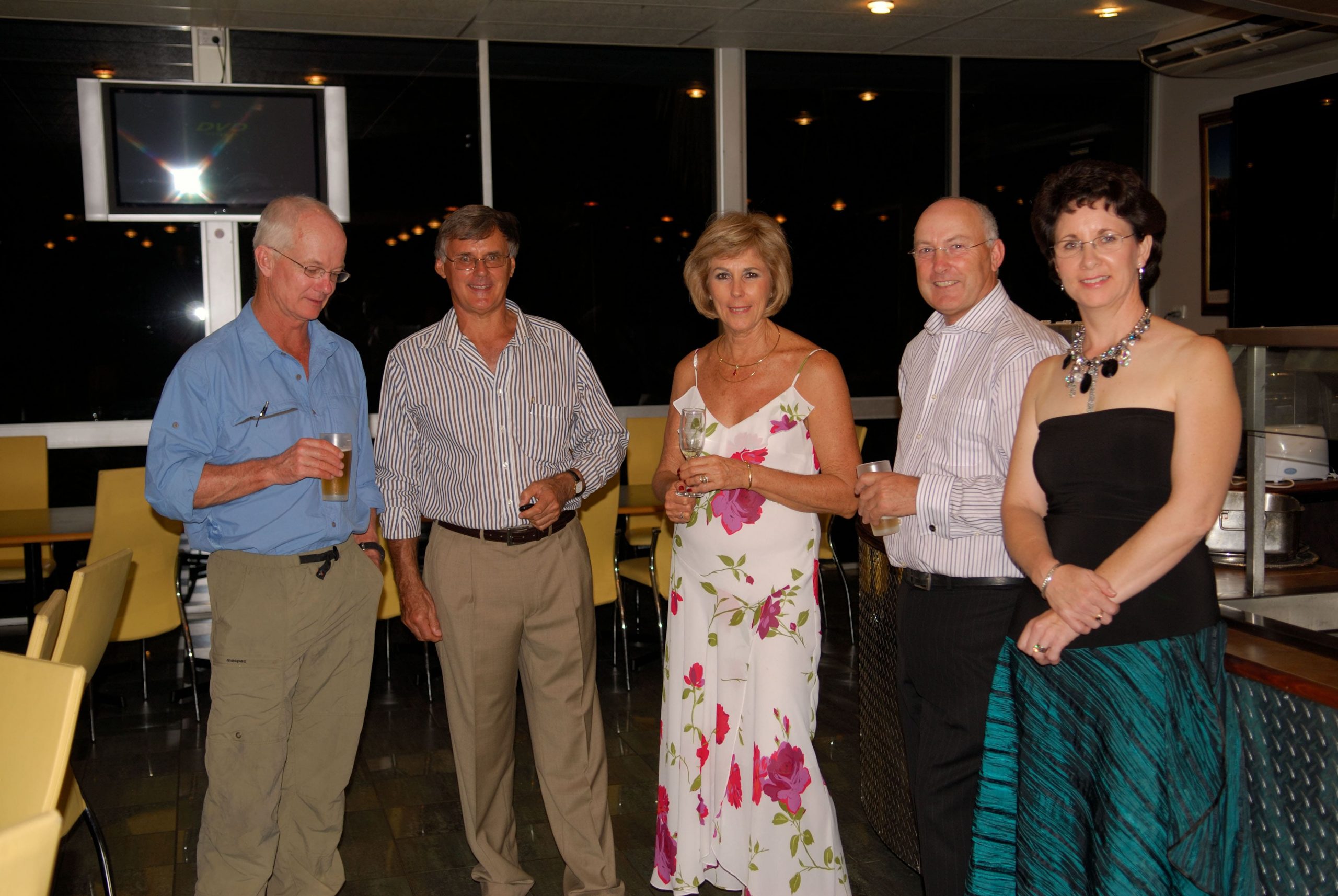
A hardy bunch of 43 souls comprising swimmers and supporters from Balmoral Beach Club (BBC) left the chill winds of Sydney winter behind in early June to brave the wilds of the tropical north to in the inaugural Lake Argyle Classic Marathon Swim.
Easing into the moment, declaring that you shouldn’t have too much wilderness too soon, an advance party led by the redoubtable Jon “Swampy” Attwater arrived in Broome to warm up. Unfortunately, a large saltwater crocodile had taken up residence on Cable Beach and rather liked the look of the city slickers from Awaba St, so the Sydneysiders promptly retired to the bar. Three intrepid hardy souls, Bob Virgona, Geraldine Hunt and Jenny Hole threw caution to the wind and took to the waters for training anyway. The crocodile apparently survived the experience (crocodile accessories are so passé this winter).
Tumbling off the plane in Kununurra, the Beach Club members were met by Kieran Kelly, who had just completed a private, two-week risk assessment of Lake Argyle on their behalf. The BBC team, true to form, bemoaned the fact that they hadn’t had a double skinny latté extra-large for at least an hour and were immediately steered to Books and Boabs coffee shop, the only place remotely resembling the Sand Bar north of Capricorn.
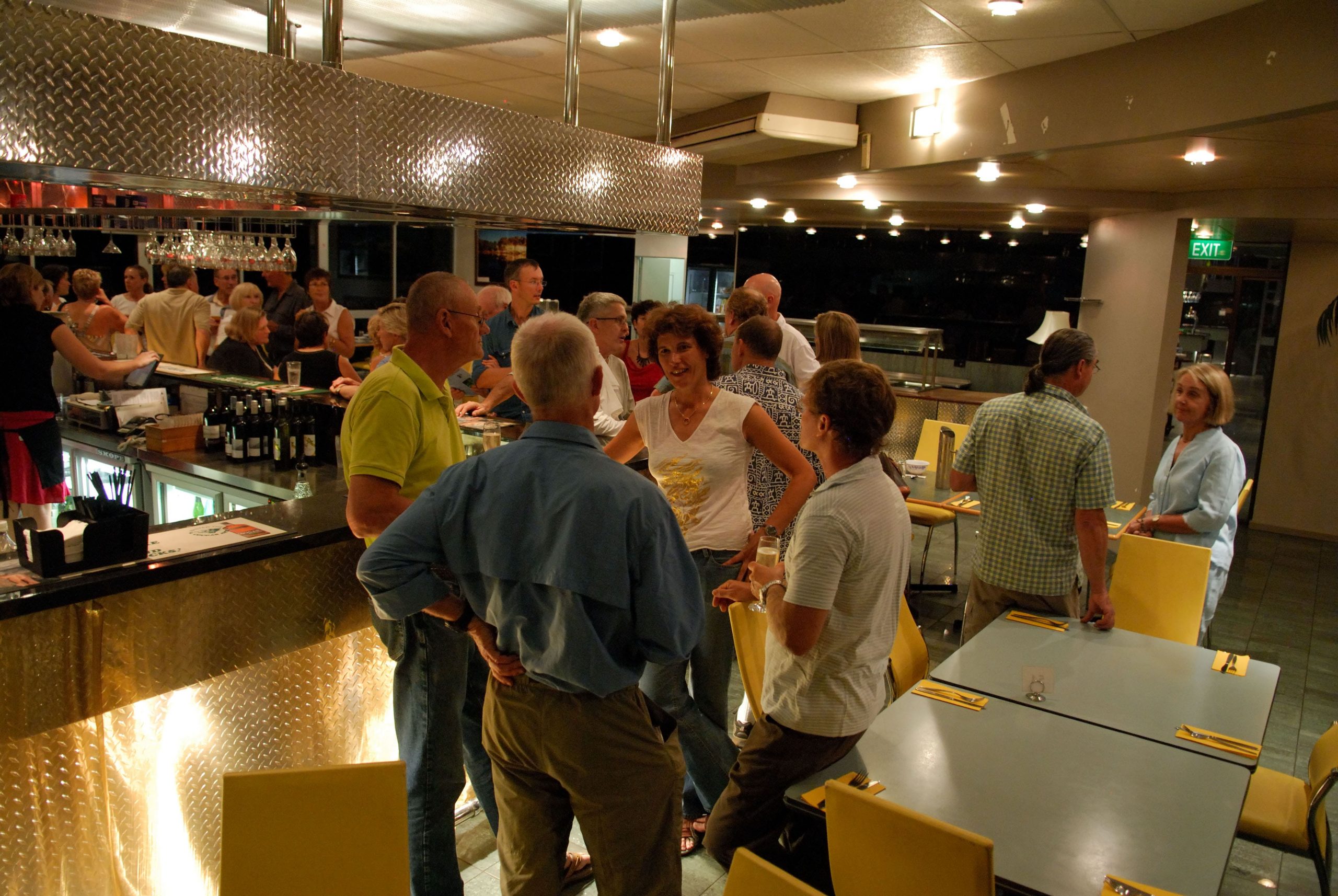
Scattering to the four winds on Saturday and Sunday, groups went fishing on the lower Ord, flew over the Bungle Bungle, visited the Argyle Diamond Mine and drove to Wyndham for a view of Cambridge Golf Course and the five rivers joining the sea. Some were even seen retiring to the Hootchery Rum Distillery Page 8 of 15 for a charge up prior to the big event. The hunters and gatherers returned with supplies for a huge barbeque on the night before the big event. All costs considered, the barramundi were far more expensive on a per kg basis than those on sale at Costi’s, but they tasted great, especially when accompanied by a dram of Ord River Overproof Rum.
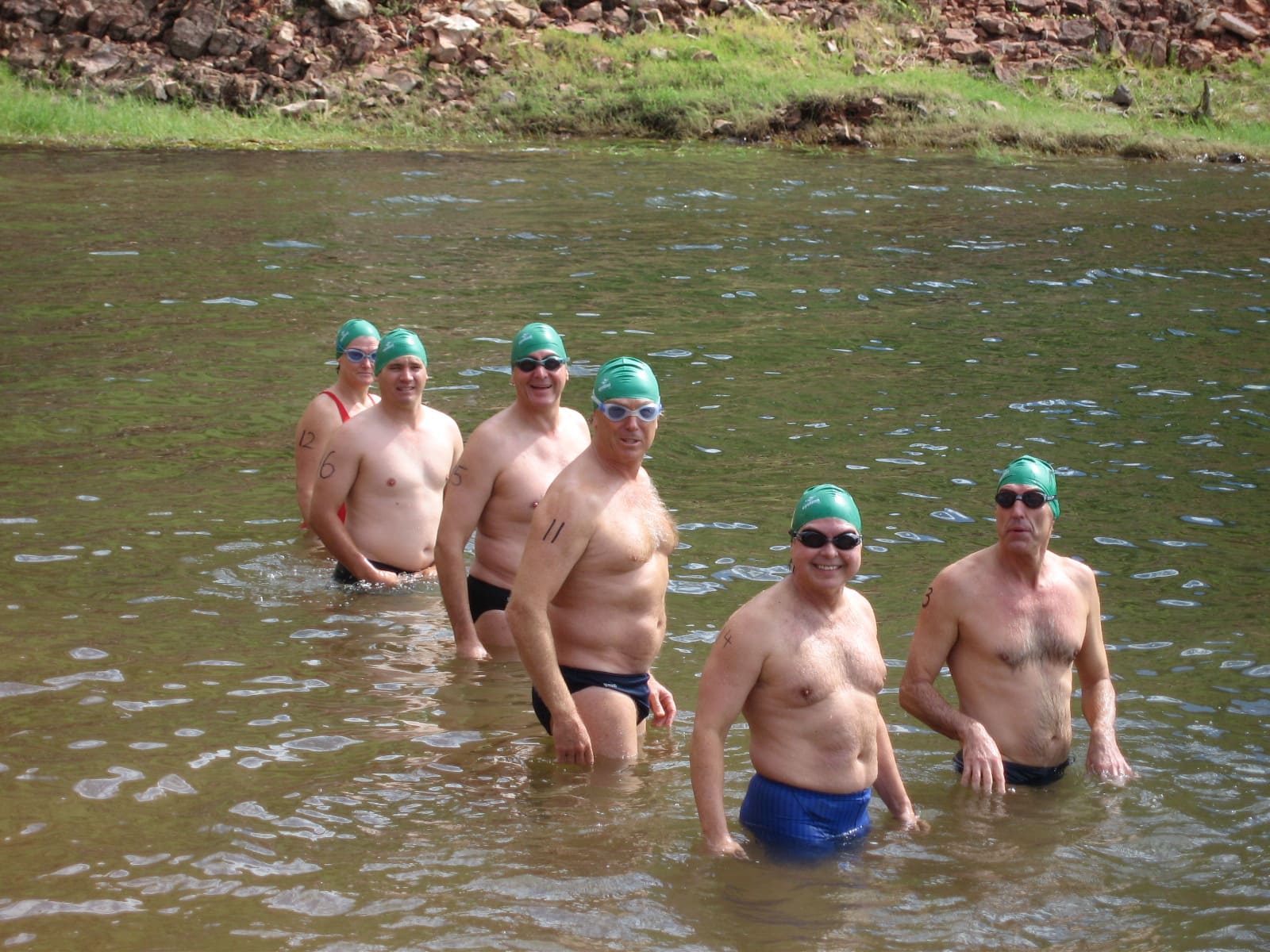
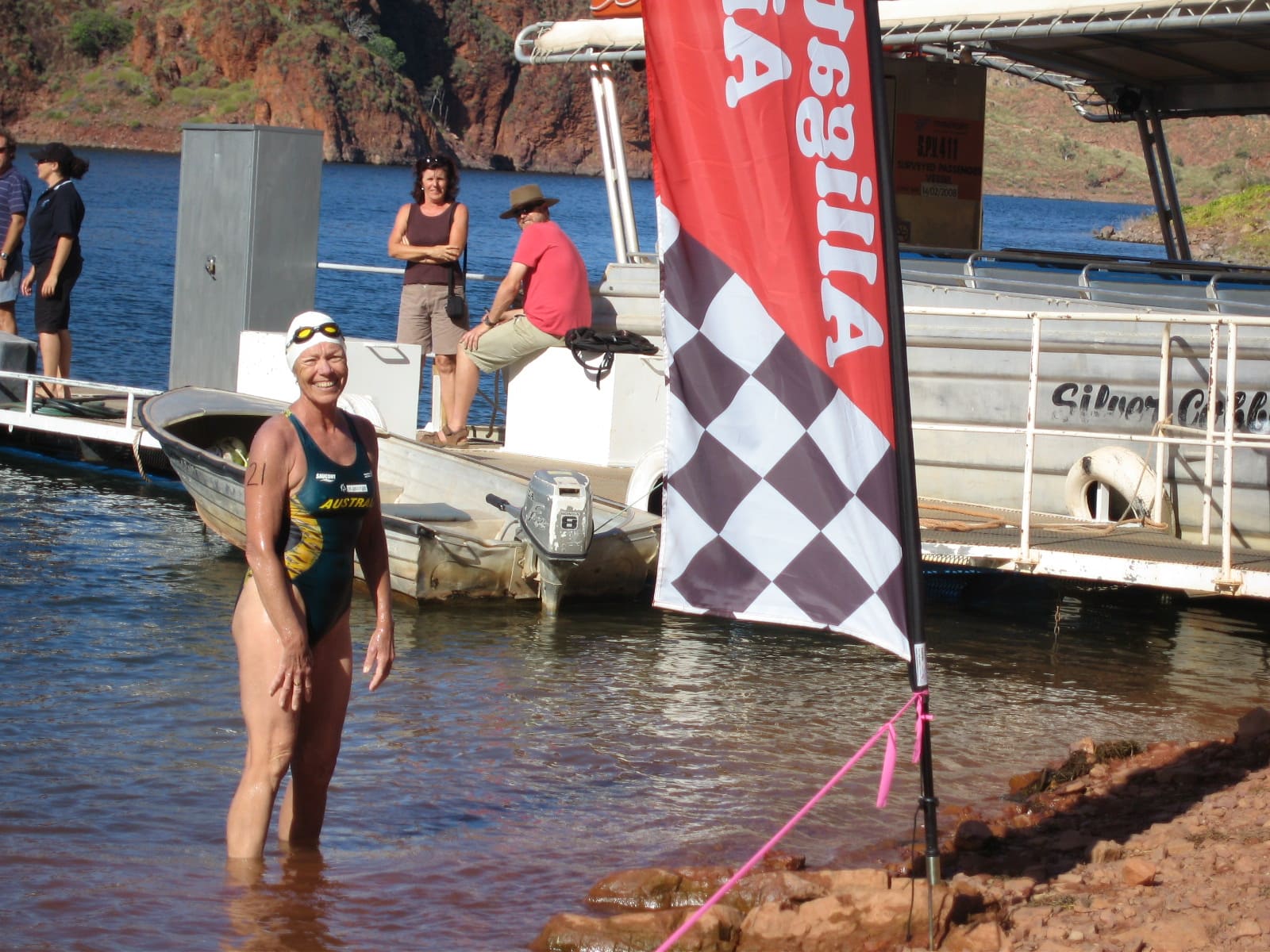
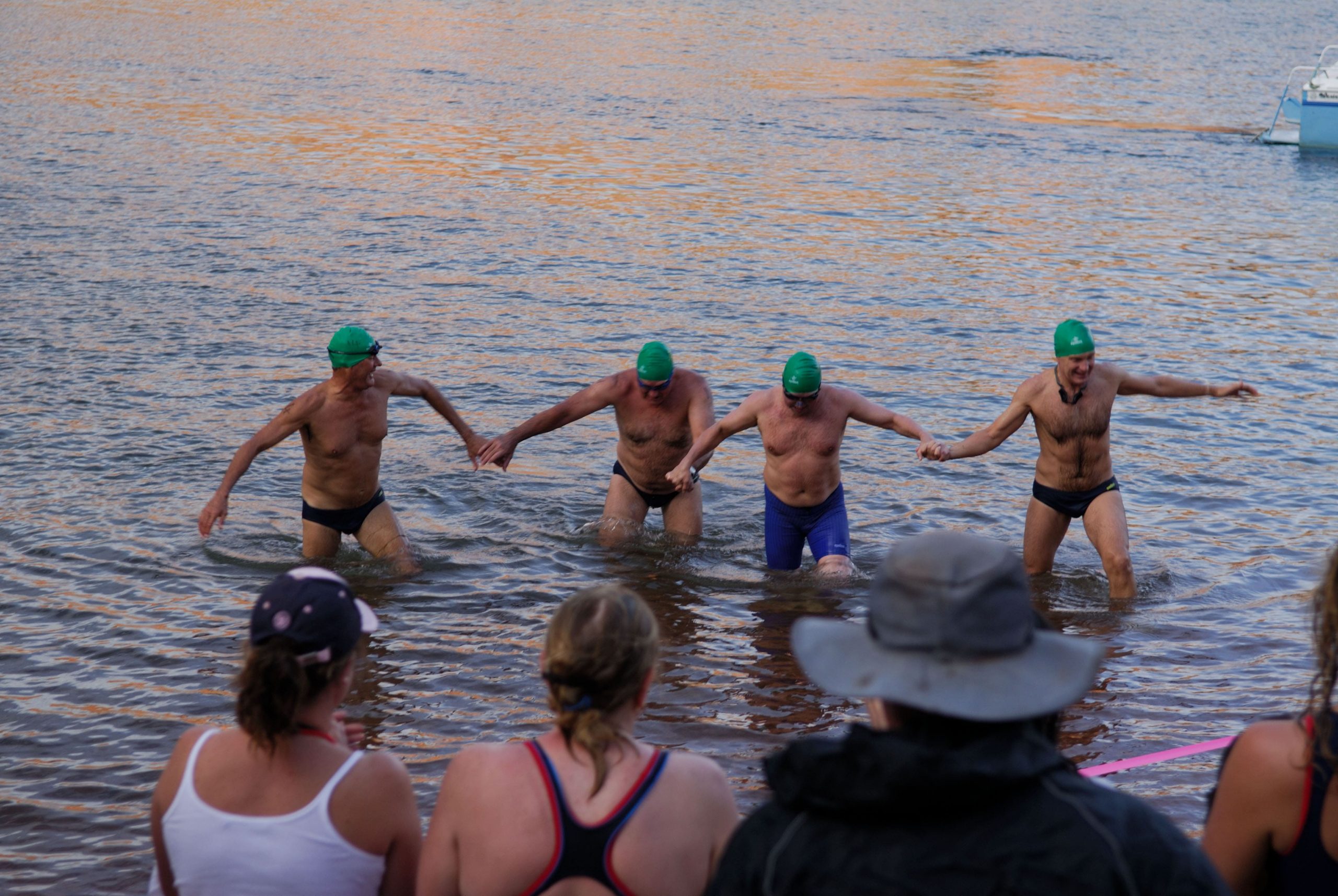
But it was all about the swimming and the bus appeared at 4.40 am on Monday to take the 20 km swimmers to Lake Argyle. The 10 km swimmers were allowed to sleep in until 7.30 am. Those sleepy heads awake, were treated to one of our great sights — a dry season sunrise north of Capricorn — and there was much excitement as swimmers alighted from the bus and made the acquaintance of their nominated boat drivers. Except for an unseasonable chop on the back of a strong southerly, swimmers were treated to warm, clean water, agreeable boat drivers, no crocs and a surprising absence of giant snapping turtles (Snappius Amputatus Reptilius) which breed on the Pelican Islands and reportedly grow to a tonne in weight. Christine Beard swore she saw a shark during the swim but this could not be confirmed.
Our little champion, Charm Frend, was off in the first wave of the blue-ribbon 20 km solo event. Unfortunately, she encountered some of the relay teams in the 20 km pairs and fours as she returned up the lake. Hearty encouragement was shouted but it wasn’t enough to ensure victory as Charm met some very young, quick swimmers, but nevertheless finished a credible third place in a time of 7h 08m 30s.
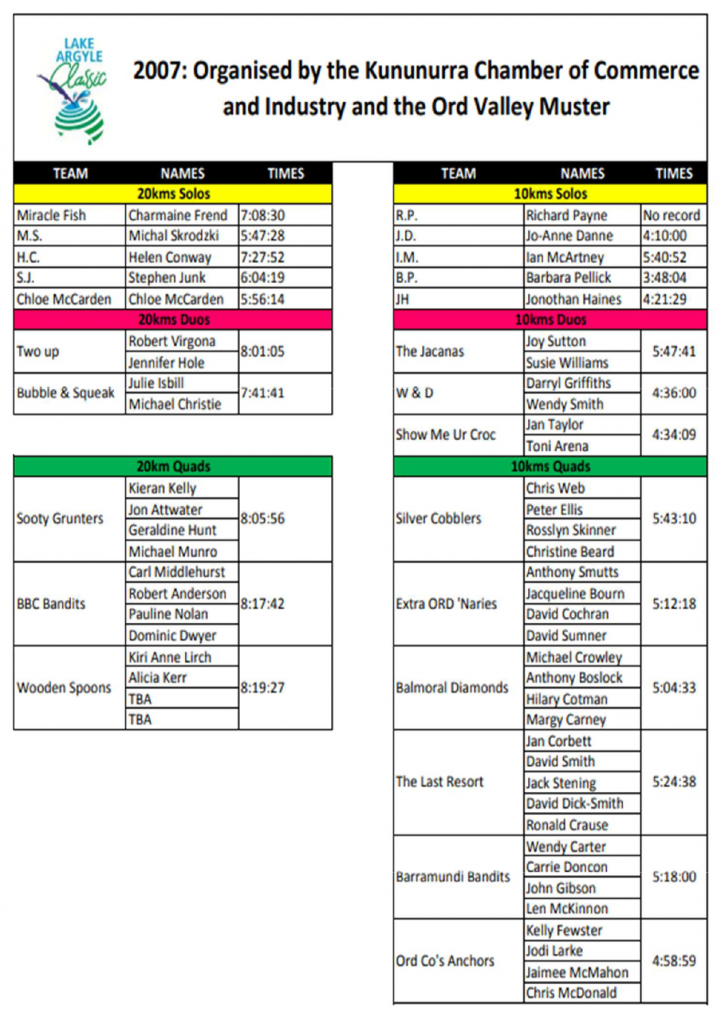
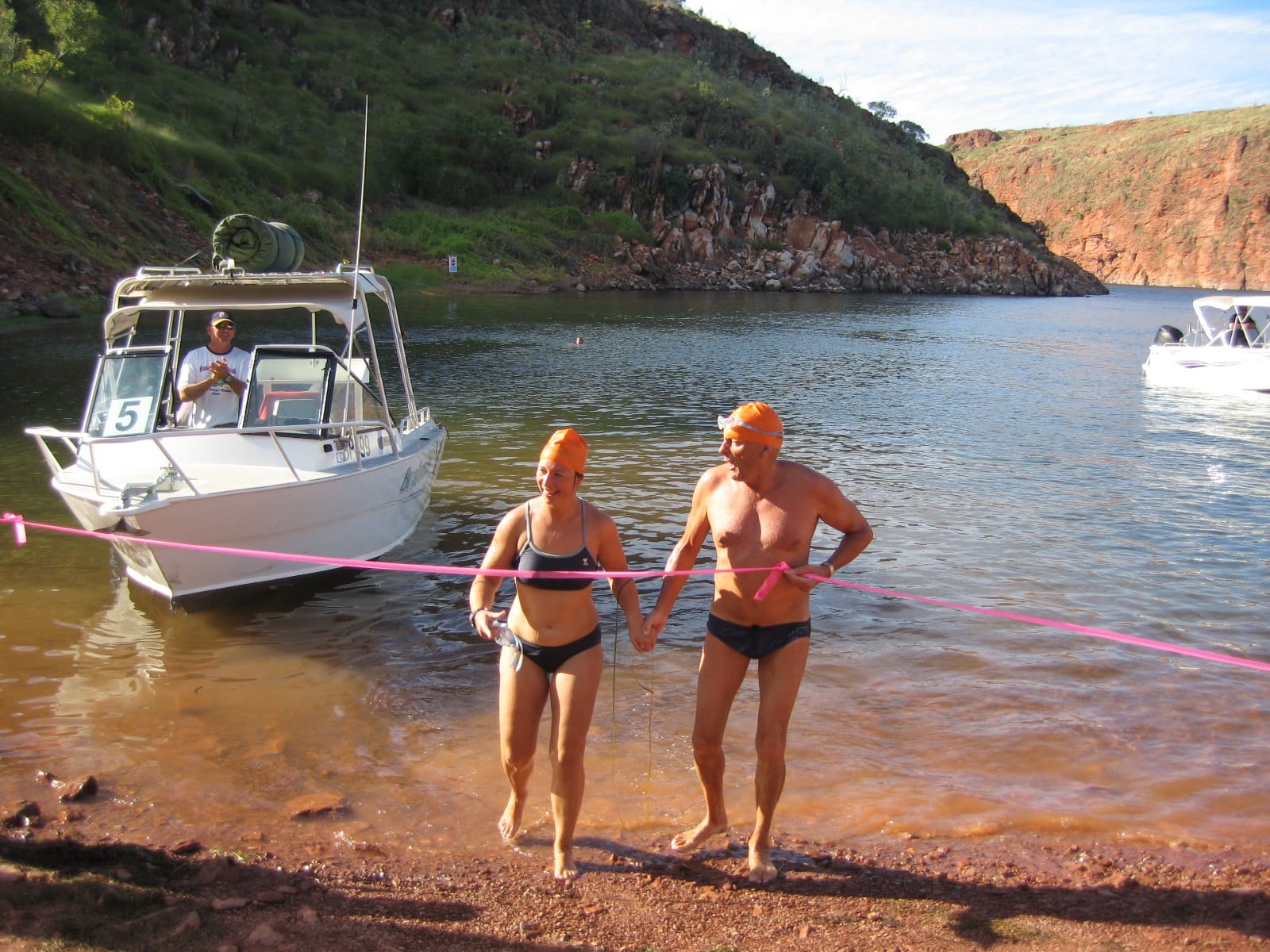
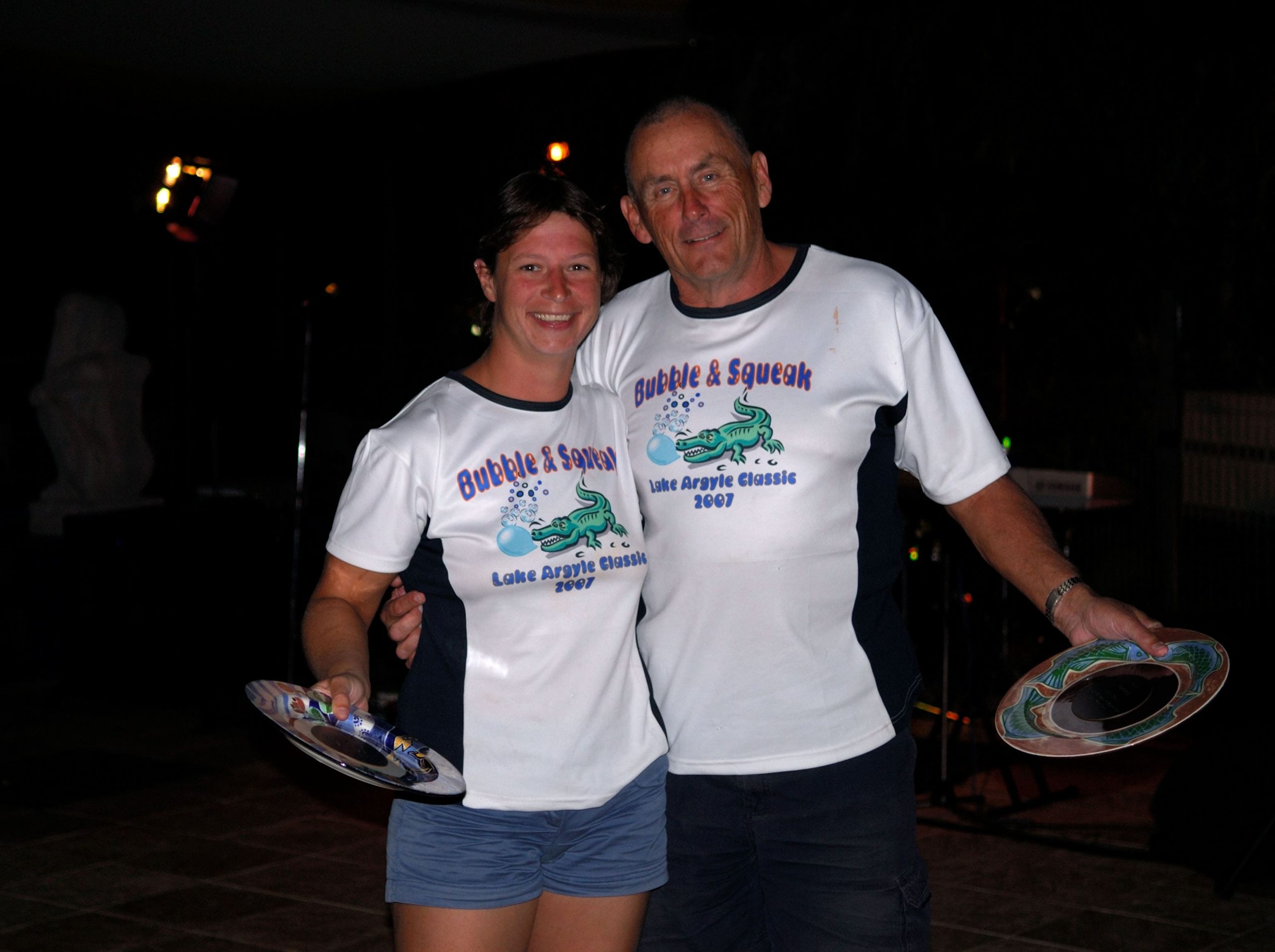
Other BBC teams to finish on the podium and bring home a coveted plate decorated by one of the local aboriginal communities, were the Sooty Grunters, 1st in the 20 km quad in a time of 8h 05m 56s; Two Up, 1st in the 20 km duo event in a time of 8h 01m 05s; and Show us your Crocs, 1st in the 10 km duo in a time of 4h 34m 09s.
Special mention should go to those who embraced the philosophy of the swim which is ‘To finish is to win’. Pauline Nolan put up a gutsy effort for Tim Anderson’s BBC Bandits and the patron was singing her praises when he alighted on shore at the boat ramp. Well done Pauline.
In all, 31 swimmers competed from the Club in nine teams. This was a very credible effort as 26 teams started the race. Thanks must also go to the nine supporters who very capably helped those in the water — Viv Anderson, Pamela Hutchins, Ann Whitney, Kate McKinnon, Chris Crowley, Tony Fitzgerald, Jason Attwater, John “Gibbo” Gibson and Andrew Gregory.
Teams from the BBC were:
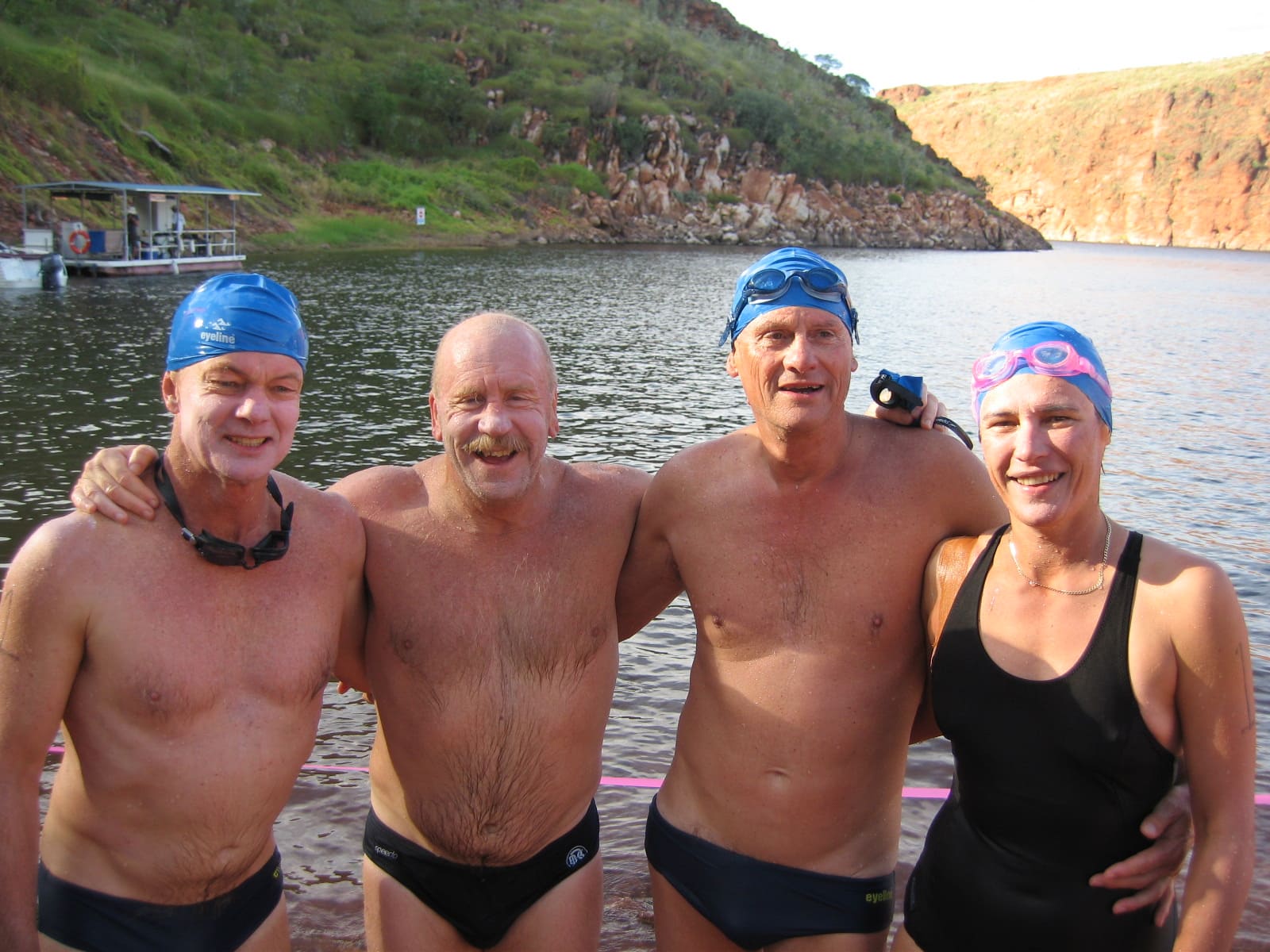
Sooty Grunters, 20 km quad: Kieran Kelly, Geraldine Hunt, Michael Munro, Jon Attwater
Show us your Crocs, 10 km duo: Jan Taylor, Tony Arena
BBC Bandits, 20 km quad: Tim Anderson, Carl Middlehurst, Dominic Dwyer, Pauline Nolan
Extra Ord’naries, 10 km quad: Tony Smuts, Jackie Bourn, David Cochran, David Summer
Two Up, 20 km duo: Jenny Hole, Bob Virgona
Mirvac Fish, 20 km solo: Charmain Frend
The Last Resorts, 10 km quad: Jack Stening, Ron Crause, David Dick-Smith, David Smith
Silver Cobblers, 10 km quad: Rosslyn Skinner, Christine Beard Chris Webb, Peter Ellis
Balmoral Diamonds, 10 km quad: Michael Crowley, Margaret Carney, Tony Bostock, Hilary Cotman
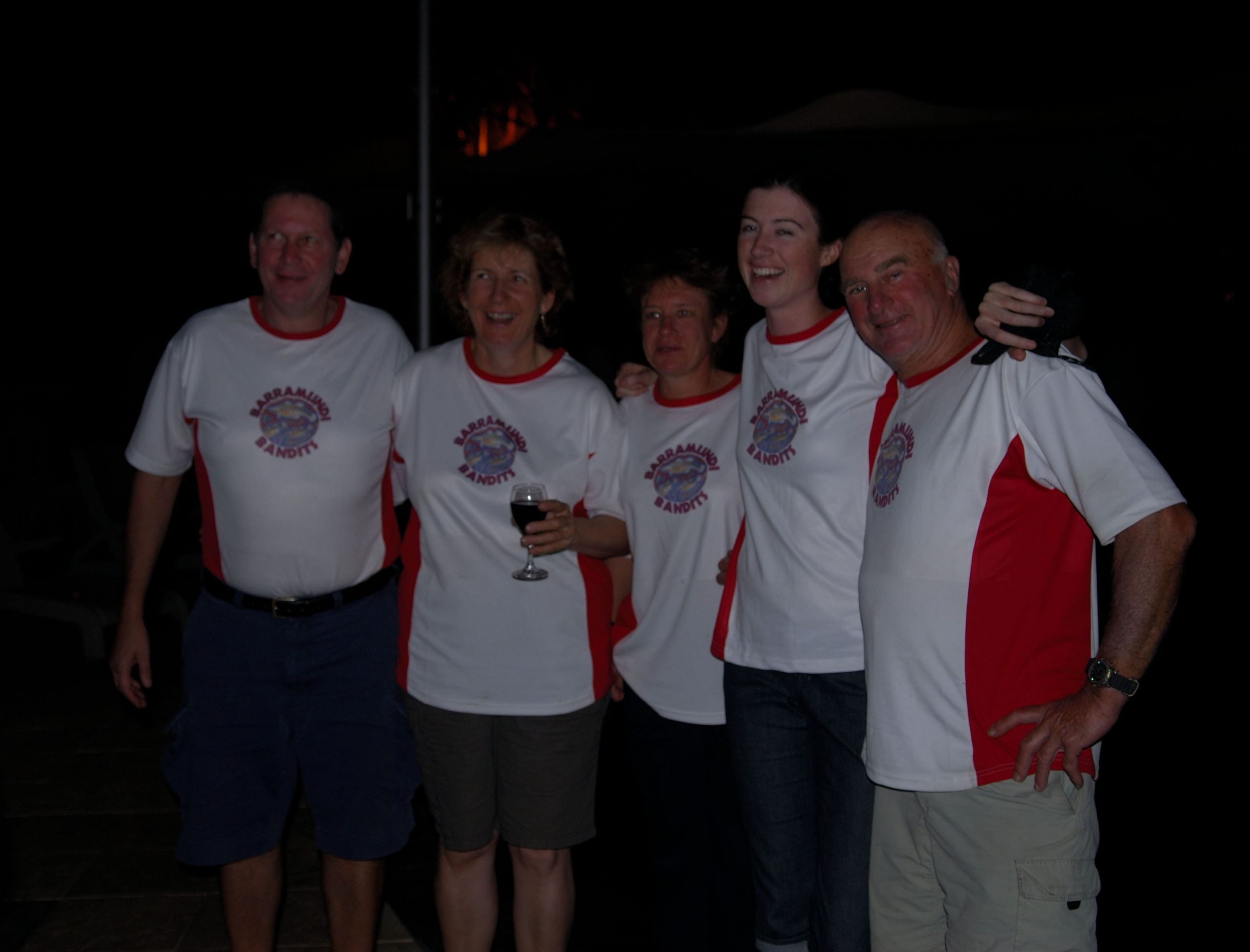
Barramundi Bandits: Len McKinnon, Louis Stevenson, Carnie Doncan (Kununurra), Wendy Carter (Kununurra)
The complete swim results in 2007 were: