
- All
- Day 0 - Reconnaissance
- Day 1 - The Adventure Begins
- Day 2 - The Middle of Lake Argyle
- Day 3 - Finish




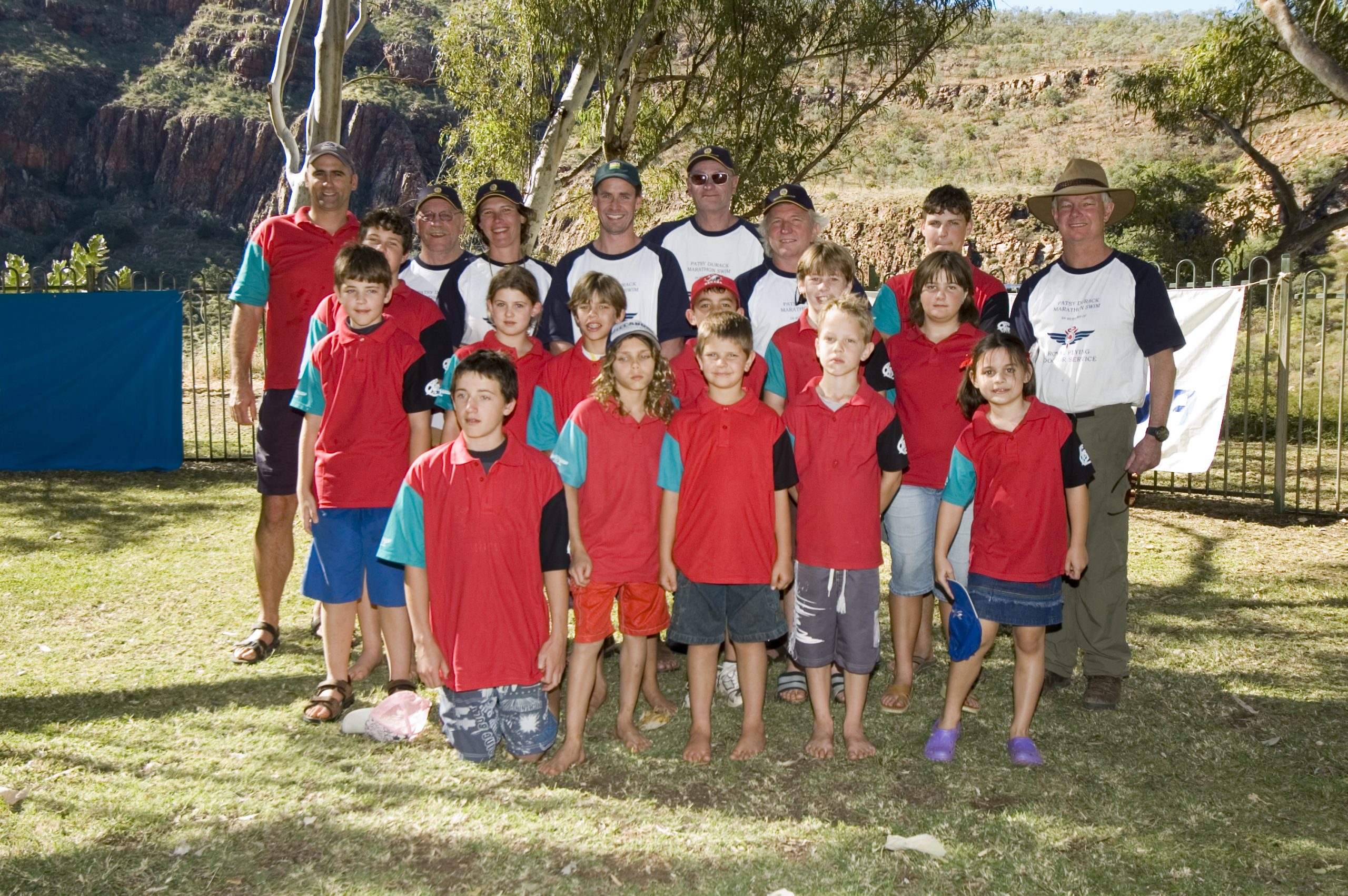
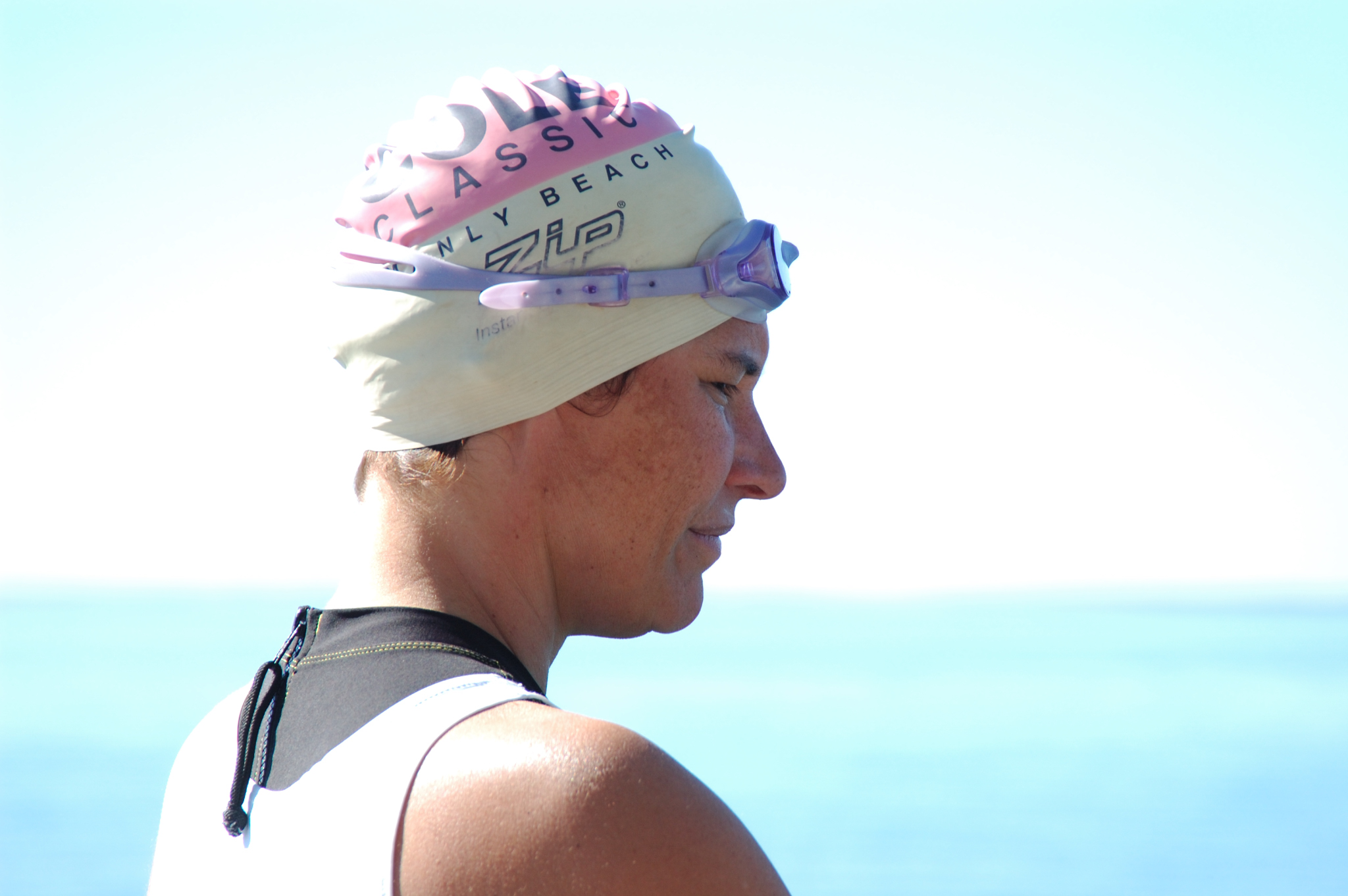
By Kym Dunbar
A history making swim
Never thinking they would make history, a group of six swimmers set out on an adventure to swim the length of Australia’s largest lake.
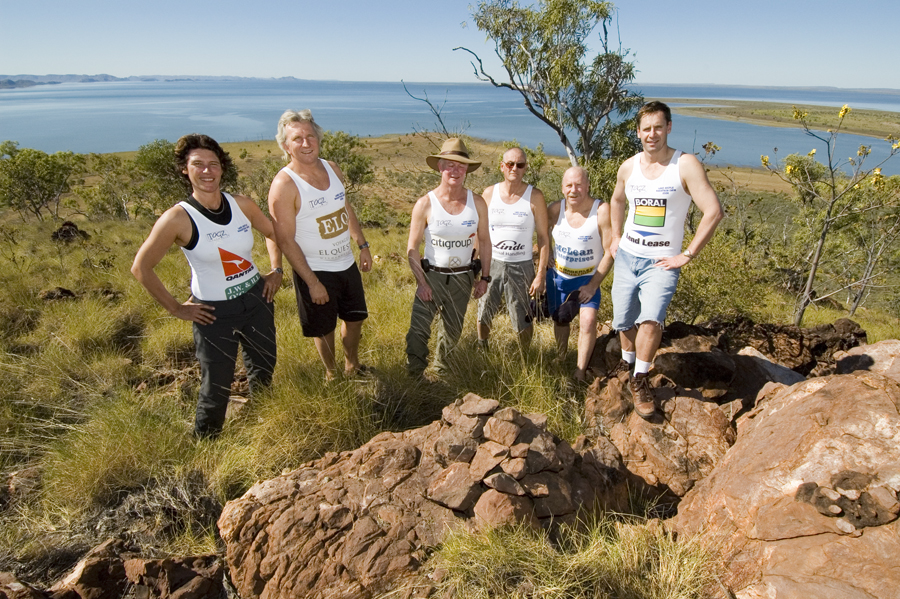
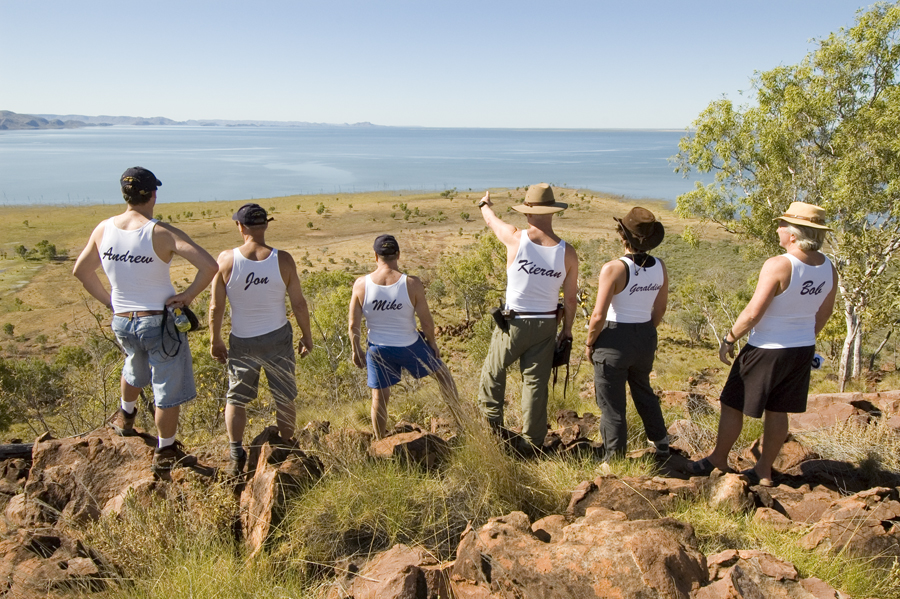
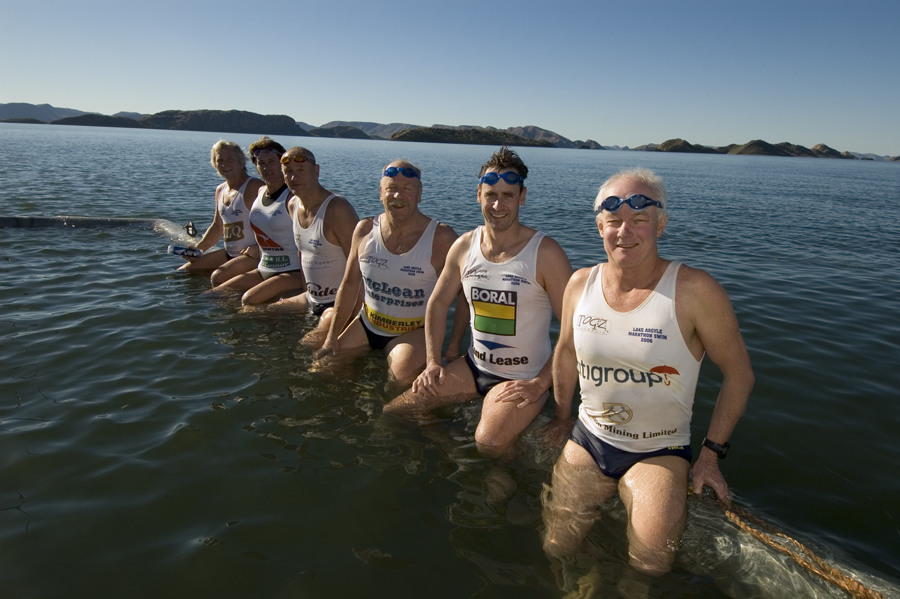
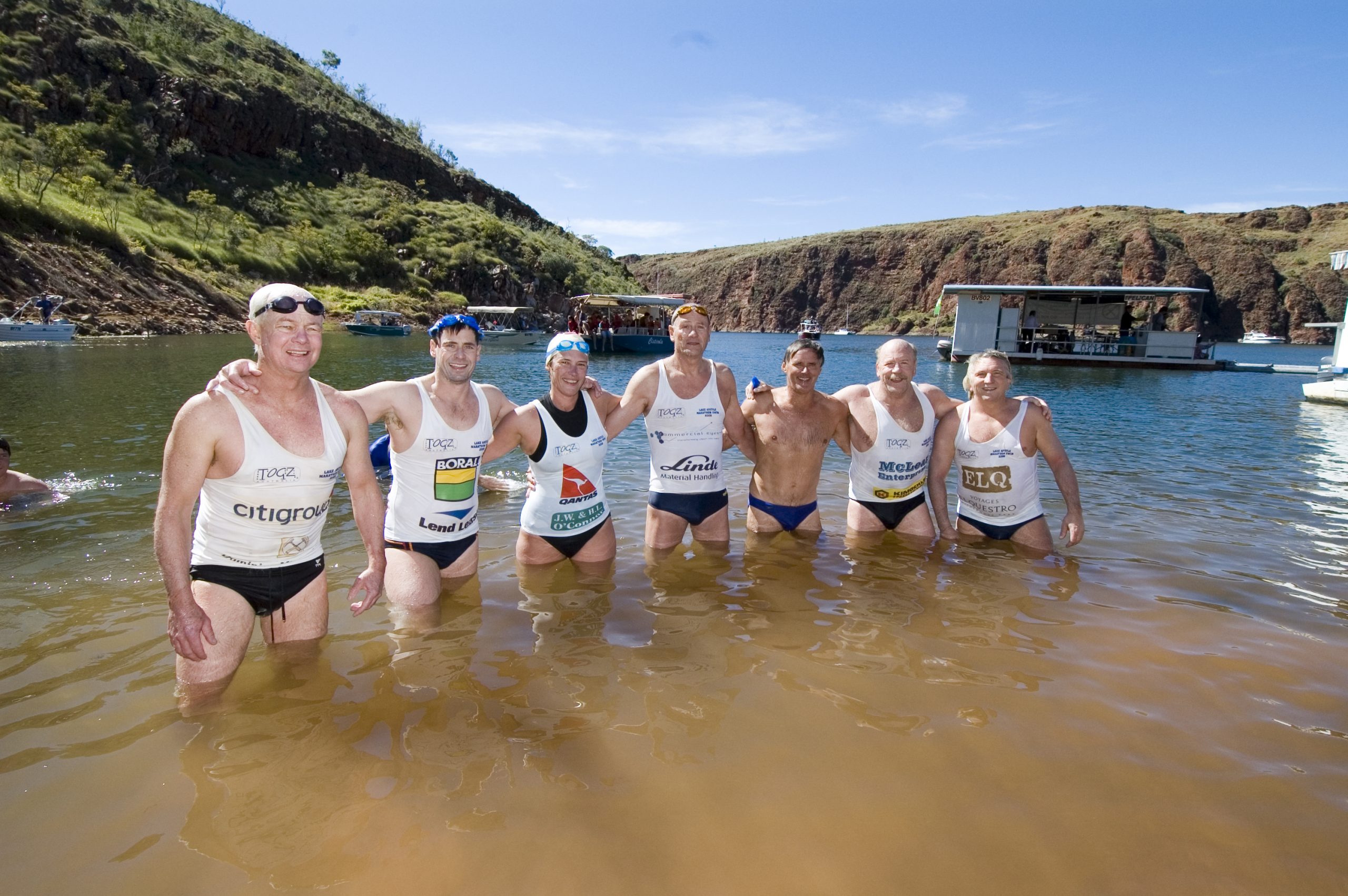
In June 2006, Kieran Kelly led a team of five other swimmers from Balmoral Beach Club in Sydney to the remote Kimberly region of Australia’s far north. Kelly along with Geraldine Hunt, Andrew Rosengren, Robert Johnson, Michael Munro and Jon Attwater arrived at Lake Argyle in Western Australia to take up a challenge – to be the first group of swimmers to cross 60 km of Lake Argyle, following the old Ord River water course.
Lake Argyle is one of the world’s largest inland freshwater lakes and, besides the Great Wall of China, the only manmade structure visible from space.
It was only after a lot of planning and support of the Kununurra locals that the swim became a reality.
An idea is born
Swimming the length of the lake came from left field. Kelly, known for his adventuring spirit, was the first to walk across the Tanami Desert with friend Andrew Harper in 2002. Out in the desert for six weeks, Andrew was an expert cameleer and Kelly a good navigator.
Surprisingly, at journey’s end, they arrived at Lake Gregory, near Mulan in the eastern Kimberley’s, to find it full of water. Like most outback lakes, it fills only sporadically. After setting up camp, Kelly went for a swim in the calm, pristine water. He started swimming and eventually swam about a kilometre. He stood up and it was still only waist deep. It was pristine and so wide he could not see the other side of the lake. On the way back it occurred to him that we’ve done a lot of swims all over the place but never in an inland lake.
Returning to Sydney, he talked to a few friends, in particular Jon Attwater. One day they were tossing around the idea and Kelly suggested swimming Lake Gregory or failing that, Lake Eyre. Attwater suggested Lake Argyle. But Lake Argyle was rumoured to have crocodiles.
Years of planning
Kelly started investigating the Lake Argyle option. At a disadvantage as he knew no one in the Kimberly, he ran an ad in The Kimberley Echo newspaper seeking volunteers to support the swim. Luckily a long time Kununurra resident, David
Crock, responded and, after a long telephone discussion, suggested the first point of contact should be Jim Hughes.
“I knew Jim loved a personal challenge and he wouldn’t be able to resist this,” Crock said. “Jim was easy to rev up and that’s why I recommended him,” he said.
Kieran also contacted various Kununurra organisations, including the Kununurra Chamber of Commerce and Industry (KCCI). Everyone said, “That’s not a bad idea” and most agreed with David Crock that Jim Hughes was the man to talk to. Kieran wondered who was this Jim Hughes?
Keen to find out, as he suspected, correctly as it turned out, that the swim would not proceed without help from Hughes, he rang Jim and talked to him about his proposal to swim the length of Lake Argyle. Jim responded, “Why would you want to do that? You can just use a boat.” And that was the beginning of a friendship between the two men.
Logistics
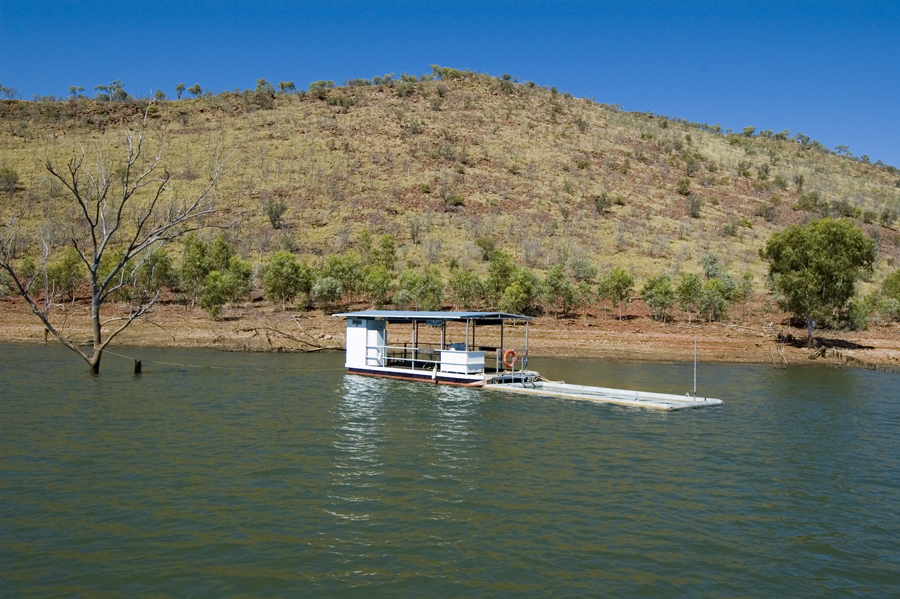
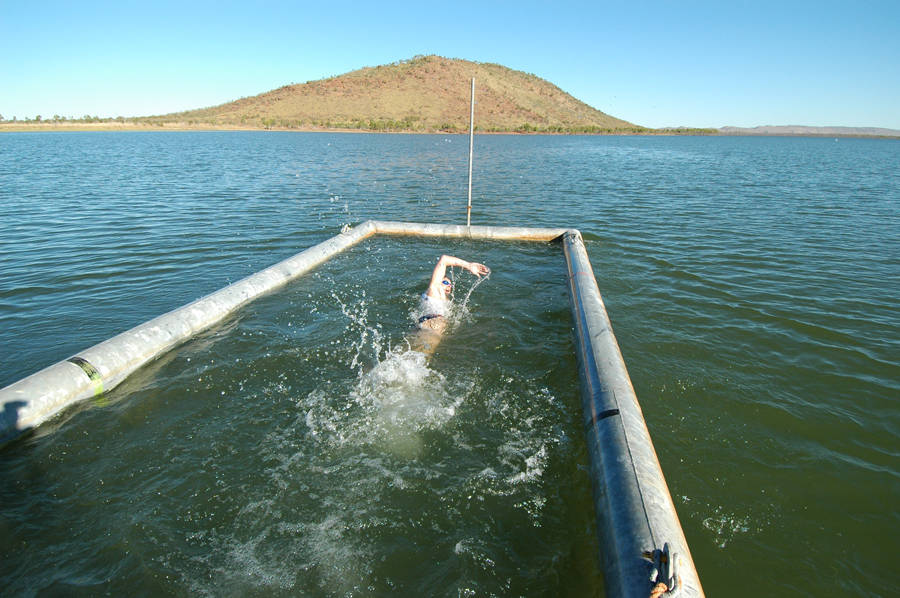
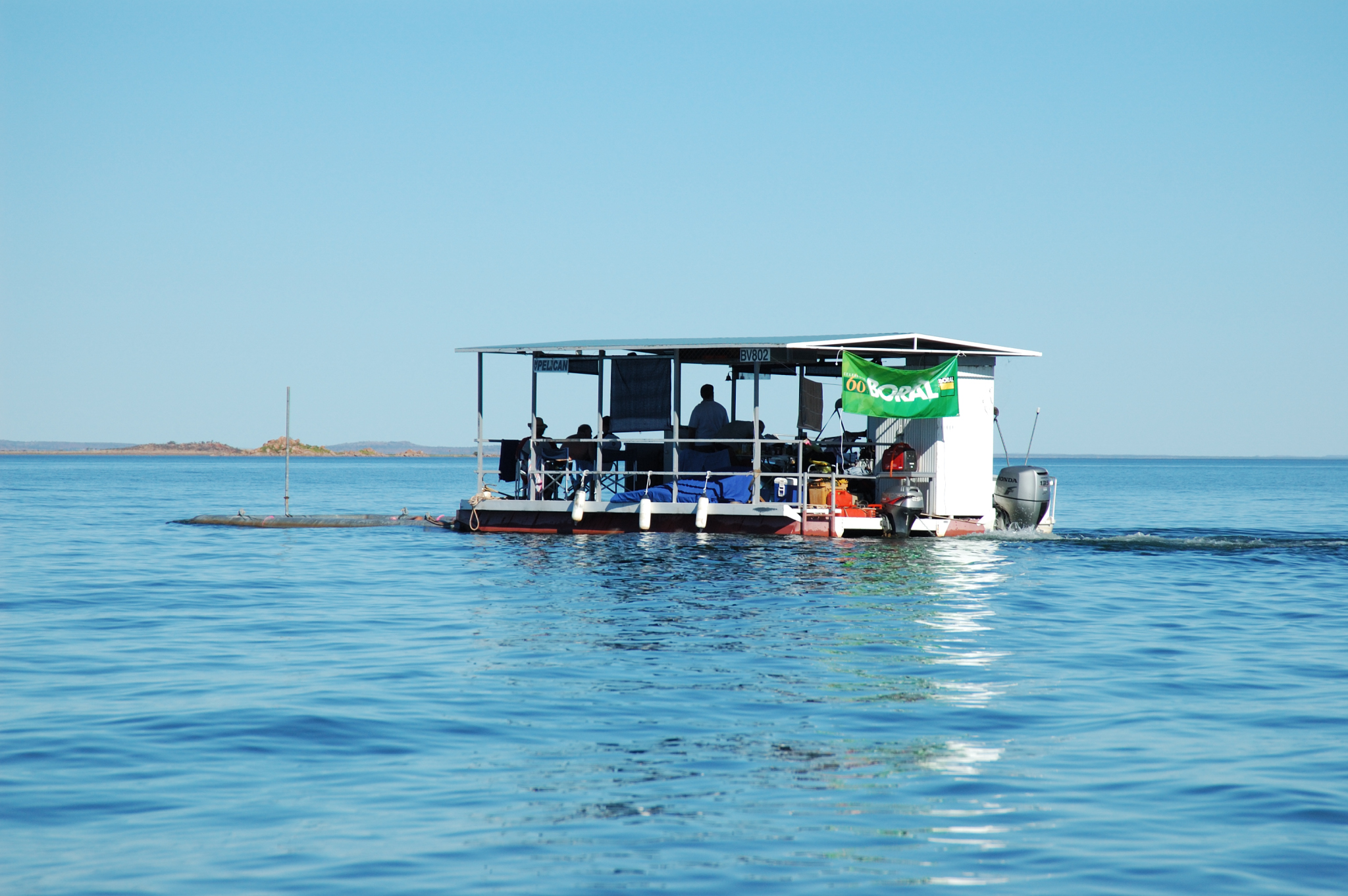
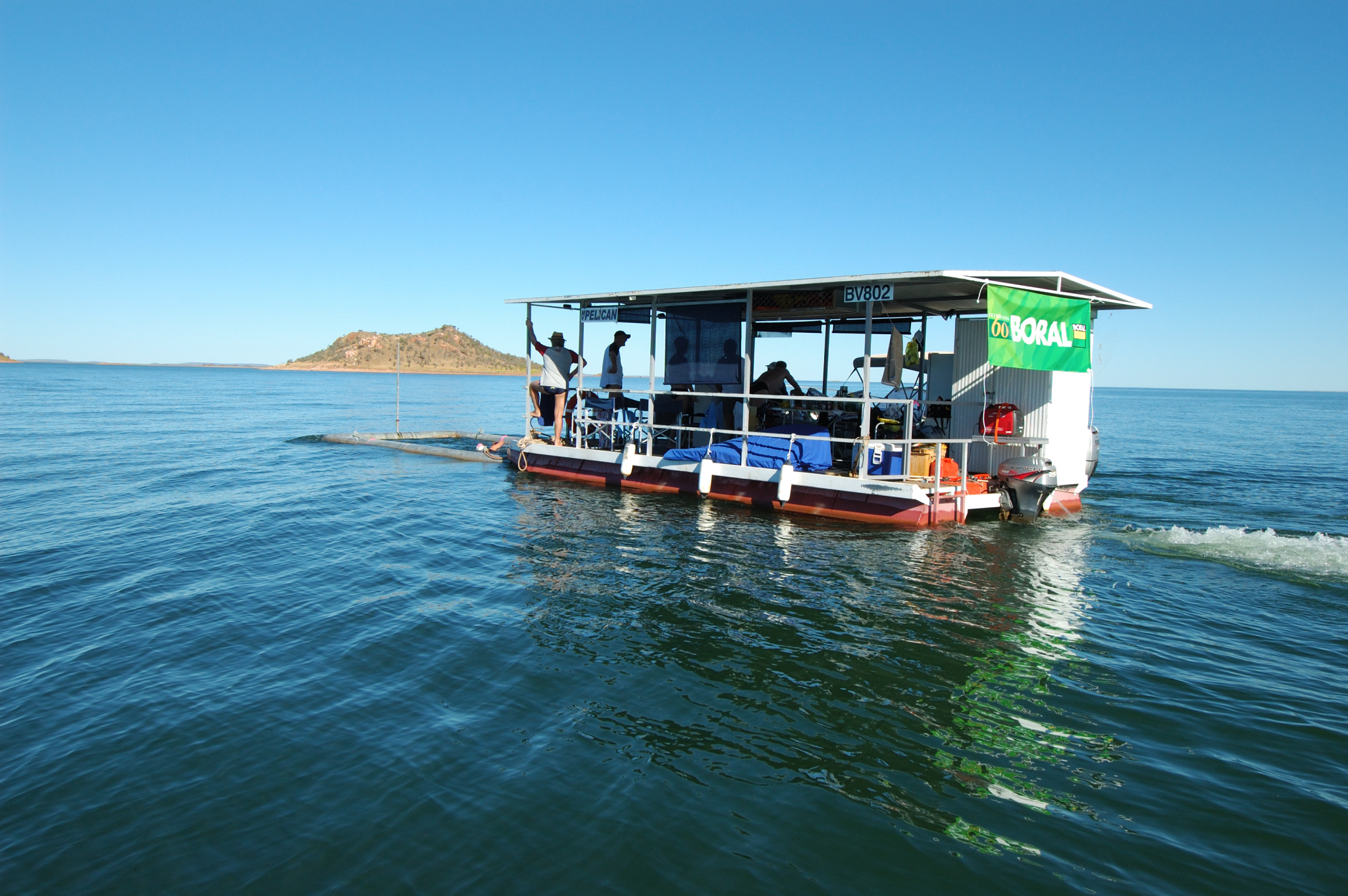
With the swim being a relay, the swimmers needed a base on the water. Each swimmer was to do half an hour in the water, get out and someone else take over. Hughes immediately volunteered that he thought he could organise a barge.
Hughes also started to work on the council and local Kununurra authorities and Kelly worked on the government bodies, Northern Land Council, Western Australian Water Resources Commission and all sorts of other people to get the relevant permits and permission.
But there was a complication. A Mabo claim had been lodged on Lake Argyle. Not the lake itself, but the islands that protruded from it. If Kelly’s team were going to do the swim, they had to camp on two of the islands overnight. Kelly approached the Northern Land Council and Western Australian Government to get permission to camp on Lagoon and Bullanyin Islands. At the time there was no decision on the Mabo claim so getting permission was complex and took a lot of time.
Safety
Then there was the question of whether it was safe to swim Lake Argyle. Kelly spoke to a friend, Clifton “Blue” Pugh, a Northern Territory identity and former crocodile shooter. He was shooting Saltwater Crocodiles in the Ord River before the building of the dam. Blue was sure there were saltwater crocodiles in the lake. They were there the year the dam wall went up and he believed some would have been trapped by the rising waters upstream of the dam wall. He told Kelly there were probably a few old ones left. They live around the marshy fringes of the lake where there is food. But there would not be any in the middle of the lake because there were few fish to hunt. Kelly followed up with Professor Harry Messel at Sydney University. He agreed with Blue. He said the real name for them should be estuarine crocodiles because they swim down and hang around the estuaries where the river goes into the sea to breed. They then go back upstream and live in fresh water.
Protection from salties while swimming was a last minute issue, as the group was ready to go. Kelly was adamant he would not risk any of the group’s welfare if crocodile attack was possible. He discussed the possibility of getting a shark cage to protect the swimmers, with the irrepressible Jim Hughes..
Jim responded, drily, “Well there’s not many of them in Kununurra.” To the Sydney swimmer’s astonishment, within a week, Jim had not only found a shark cage in Darwin, but had organised a local company, Kimberley Transport, to donate a trip, to bring it down to Lake Argyle.
Jim then had to work out how to bolt it on to the barge. Another Kununurra company, Kimberly Industries, welded brackets on to the barge to hold the cage.
“The enthusiasm for the original swim from the people of Kununurra was extraordinary,” Kelly remembers. He attributes this to Jim’s involvement and his efforts to enlist support from the local community.
He also said Brad Williams, a town councillor, at the time, had a big influence on the local administration and helped them to see the tourist potential in the idea. Then Jim agreed to drive the barge for a group of people he had never met, an amazing act of generosity.
Once Jim organised the shark cage, the whole thing went ahead.
There was also some concern from the Sydney swimmers about other denizens of the lake. There are around 70,000 freshwater crocs calling Lake Argyle home. Kelly explained there was nothing to fear from them. “They will only attack if you corner them.”
Training for the swim
In selecting the team, Kelly chose seasoned swimmers with experience in long distance relays. All those invited had done long distance swimming before.
There is an implied commitment that in agreeing to take part in a long-distance relay swim, that everyone supports each other. Each person gets in the water when it is their turn whether they feel like it or not. Otherwise, it puts additional pressure on the other team members.
It was important that all swimmers were fit enough to tackle the 60 km distance. Luckily, all team members, not only had long distance swimming experience, but also were fit from a routine of daily swimming. Surprisingly, none had swum long distances in freshwater. This is quite different to swimming in saltwater as you are not as buoyant. So to get an idea of swimming in freshwater, the team did several long swims at Manly Dam, in Sydney, as well as their regular daily training.
Money raised for charity
The team chose to raise money for the Royal Flying Doctor Service (RFDS) as part of the event. When asked about why the RFDS, Kelly said he was a country boy and had experience of the amazing work they do.
Kelly first saw the impact the RFDS made on the lives of people in the outback, in 1999. He was leading an expedition down the Wickham River retracing Augustus Gregory’s first pack horse trip into the Northern Territory. When they arrived at Victoria River Downs (VRD), the sprawling cattle station on the Wickham River, there was a RFDS airplane parked on the VRD airstrip. He had never seen one before. It carried a doctor and critical response team to the station to care for the station master’s wife who had fallen from her horse and broken her neck. They flew her out for urgent treatment in Perth.
“The RFDS is a vital lifeline to the indigenous communities and people living in the outback. It is an important part of Australia’s culture, and its vital that it’s supported by people like us from Australia’s big cities.” Kelly said.
Kelly had a history of outback challenges where he also tried to raise money for worthwhile causes. He thought the RFDS was appropriate for the first attempt to traverse Lake Argyle by swimming. It was in the Kimberley where there were few medical facilities. Raising money to support the RFDS made sense and the whole swim team agreed. They ended up donating more than $100,000 to the organisation.
“Some people might think it was a crazy thing to do to swim across Lake Argyle, but the money we raised may have saved someone’s life,” Kelly said.
Lake Argyle reconnaissance
The first thing the team did when they arrived at Lake Argyle after the long flight from Sydney was to take a look at the start and the planned course. They were ferried to Flying Fox Knoll at the southern edge of the lake by the obliging local David Crock. Looking down the course that followed the old Ord River, everyone realised what a huge body of water Lake Argyle is. It was a bit daunting. Every member of the team had completed many swims, but none in a vast inland lake.
The swim was 61 km and they set themselves 21⁄2 days to do it. They knew it was within their capabilities to complete the challenge—as long as nothing went wrong. Kelly and Hughes had planned the swim to the last detail but knew something unexpected could always happen.
Building a cairn
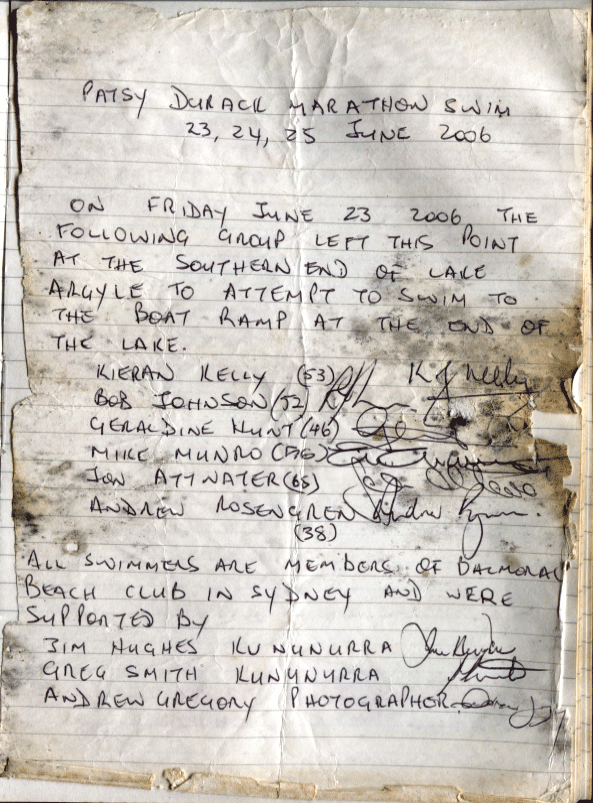
The group wanted to leave behind some memento of their swim in the far north. Improvising, Kelly wrote a small note which was signed by all swimmers and support crew, a copy of which is reproduced below. Conscious of the harsh conditions, including bushfire which would sweep across Flying Fox Knoll during most dry seasons, Kelly salvaged a drink can from the barge and sealed the document inside. This was subsequently interred on Flying Fox Knoll in a small cairn built from rocks found at the site. It wasn’t perfect but it was the best that we could do and recalled the cairns often left behind by Australian explorers to record their passage or to leave messages for other exploring parties. This meant a lot to the Sydneysiders, as an unobtrusive reminder of their endeavours in the Carr Boyd Ranges.
Lake Argyle swim begins
Friday June 23, 2006, arrived. The team was once more ferried to the southern end of the lake in David Crock’s fast ski boat. The catamaran barge, with Jim Hughes at the helm and the shark cage attached, was already waiting. It had been driven down the previous day by Steve Farquhar and Jim. The barge, affectionately known as The Pelican would be a floating swimming platform for the next three days. Everyone transferred to the barge and prepared to start the ground-breaking swim.
To make it an official first crossing, they had to start with one swimmer standing on the beach at the southern end of the lake.
Jim manoeuvred the unwieldy barge towards Flying Fox Knoll. Suddenly the barge stopped 300 yards from the shore. No one could quite work out why and then they realised the cage was about 10 feet deep and they were in only about 5 to 6 feet of water.
Someone had to get out and swim through the Melaleuca trees to the shore and that was Kelly. Everyone said afterwards it was the fastest he had ever swum. He had to swim into shore, stand there and wave and the official time started. He then had to come back out to the barge the same way he went in. He reckons he swam as quickly on the return journey to the barge as he was unprotected. It was swampy with Melaleucas growing out of the water. It was ideal saltwater crocodile territory and a likely place for an attack. But he made it safely, flopped into the cage and off they went.
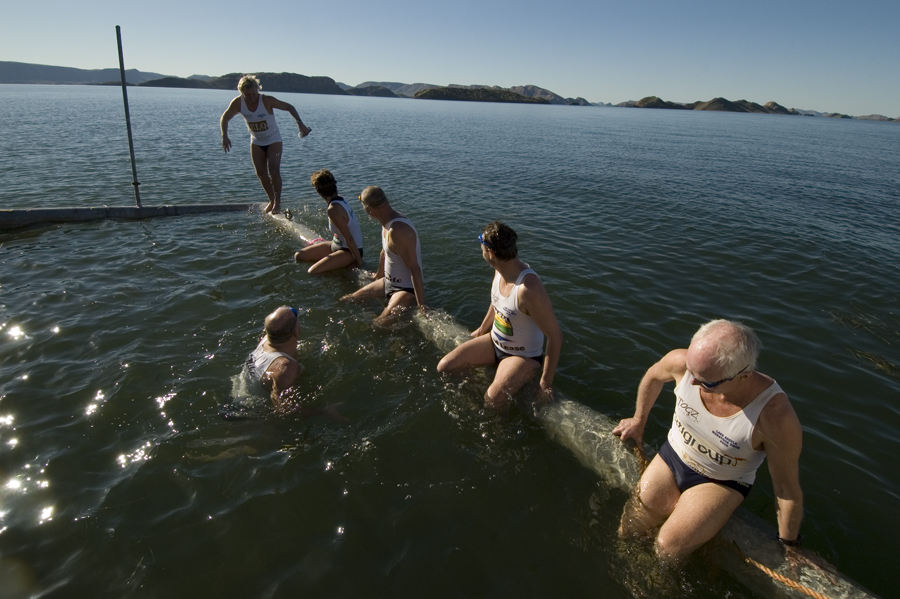
None of the team had swum in a shark cage so Kelly worried about someone getting hurt. The barge does not stop for the swimmers to change over. As people climb in and out of it, the shark cage banged against the barge. Kelly said he was frightened someone would get a leg caught or lose a finger. There is always the potential for accidents. Luckily on of the team, Hunt, was a vet and could take care of any medical needs. Fortunately, her expertise was not needed.
Perfect conditions
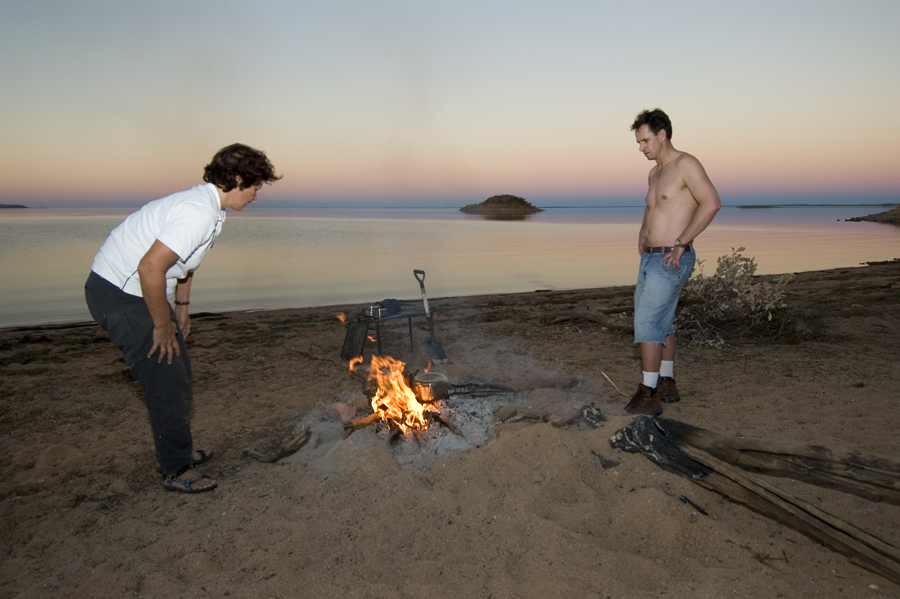
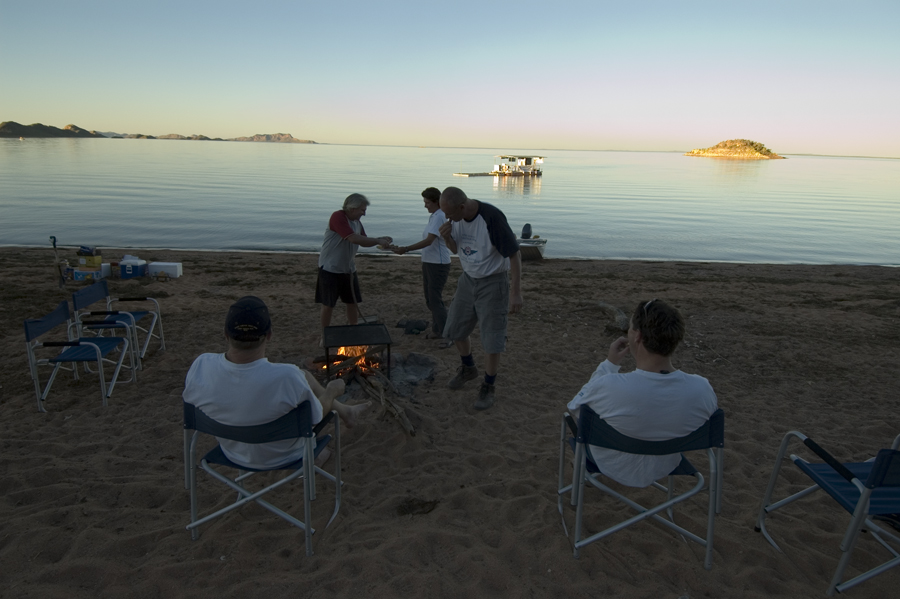
Kelly did the first leg of the swim. It soon became routine after that in perfect conditions. At the end of the first day, they camped on Lagoon Island and lit a small fire. They sat around talking and enjoying the moonlight and each other’s company.
On the first day they travelled away from the marshy southern end of Lake Argyle and were swimming in deep, reasonably cold water. Sensing that the danger in the middle of the lake was minimal, and relying on Professor Messel’s advice, the team voted not to swim in the shark cage from the second day onwards.
Lagoon Island – the first night
Kelly’s navigation skills helped the group to stay on course as they slowly ate up the miles with Jim enduring hours on his feet controlling the speed and direction of the unwieldy and sluggish barge, which laboured to keep up with some of the faster swimmers. He had to stay close but not too close to the swimmers. This is an arduous task for someone who has no experience in marathon swimming from a boat, but he took to it immediately.
Kelly and Hughes were in constant communication to stay on the right course. After telling the Northern Land Council on which islands they planned to camp, they had to find the right ones. Jim had to keep the barge going on the course that Kelly charted.
“We couldn’t have the barge wandering all over the place. He did a wonderful job and was on his feet all day. He very quickly worked out how to run a marathon relay swim.”
After a tiring but satisfying first day the group camped as planned on Lagoon Island, a tiny speck in the vast waters where they were able to roll their swags, have a fire and stretch their legs.
“I still remember that first night on the island,” David Crock recalls in 2022.
“I remember Kieran pointing out all of the stars and identifying them for us. It was a beautiful clear night.”
“I also remember that one of the swimmers, Andrew, was so fast that the barge couldn’t keep up with him and we had to marshal the two speedboats to help push the boat along. It was a constant battle when he was in the water,” David said.
What David didn’t know was that Andrew was a top swimmer and had won a Rhodes Scholarship to Oxford University for his prowess in athletics.
Visiting the Durack homestead
Kelly says one of the highlights was swimming over the original Durack homestead. The Durack’s were among the first of Australia’s great cattle kings. They were ‘kings in grass castles’, their fortunes built on flimsy soil. This was the story of Australian pioneers who made fortunes conquering the wilderness but then gave it all back to drought, isolation and an unforgiving environment.
He was able to locate where the old Durack homestead was. As they reached the location, they stopped and everyone got into the water. “It was probably a couple of hundred feet of water where we were. But it was interesting to get in the water as a team and celebrate Patsy Durack and the pioneering of the Kimberley and what a great story it was.”
There was another night camping, this time on Bullanyin Island at the end of the second day. Everyone was tired. They either slept on the beach or the barge under open skies.
The last day
The last day was to be a relaxed swim from Bullanyin Island to the wall. We were joined, in the morning by Jim’s good friend, Doug Grandison, who came on board to give Jim a break from driving and to allow him to swim with the group on the last leg into the dam wall.
Jim’s great friends Doug and Steve Farquhar had been a big help to him by relieving him at the wheel of the barge over the three days on the water.
The trio’s speedboats were handy. They were moored to the barge to allow evacuation in case of an accident, so they were vital for safety. However, they were also used when Andrew Rosengren, a very accomplished swimmer was in the water. The speedboat motors were powered up and nudged the barge as it couldn’t keep up with Andrew’s speed through the water.
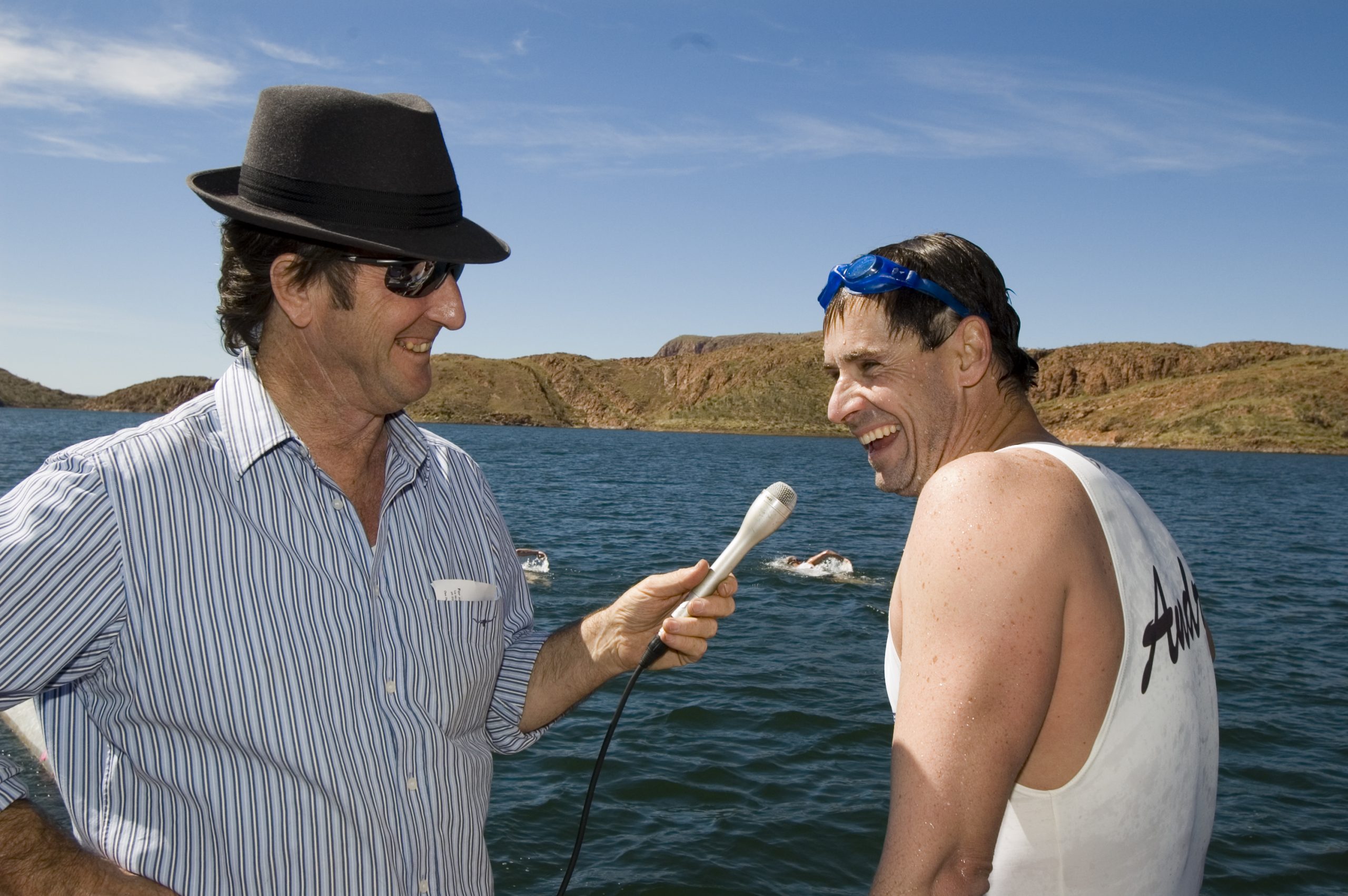
Wives and friends of the locals were ferried out to the barge for a leisurely morning. Ian McNamara, the host of the long-running Australia All Over, Sunday radio program on the ABC, came on board for interviews with the swim team. Ian and assistant Lee Kelly were flown to Kununurra by his Dick Smith, whose plane flew low over the lake and buzzed the barge.
“One of the memorable things on the last day is Andrew swimming solo almost from Bullanyin island to the dam wall, which is about eight kilometres,” Steve Farquhar recalled in 2022.
Warm welcome by locals
Kununurra locals turned out in force at the finish line to welcome the swimmers around noon on the third day. Patsy Durack’s last surviving grandson, Bill Durack, was there to greet the team and thank them for putting it on the map.
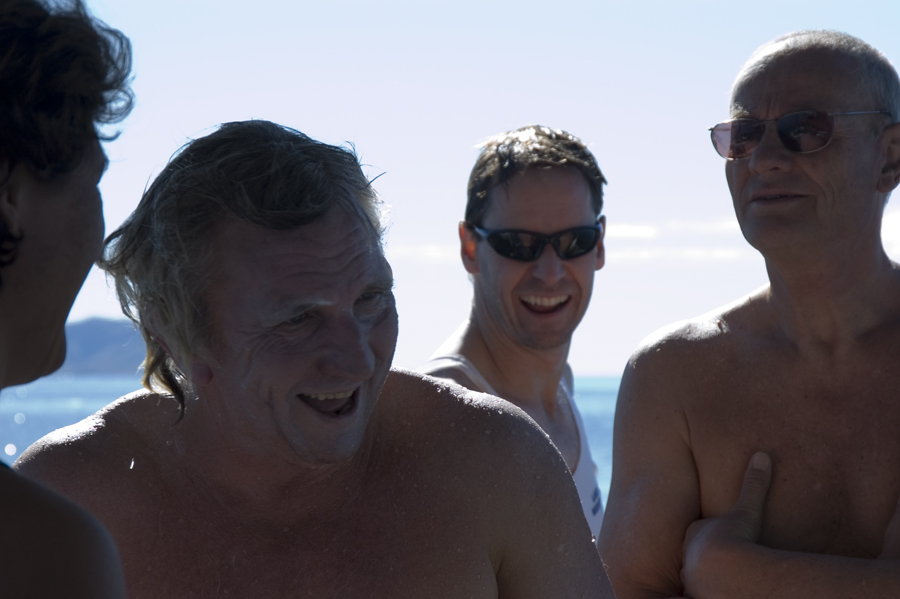
Kelly said it meant a lot to him to be part of the first team to swim the length of Lake Argyle. “Everyone in the team really enjoyed the swim and have never forgotten it. And we did something for the local community of Kununurra as well as the RFDS.”
The locals hosted the swimmers and boat drivers to a barbecue at the boat ramp. Everyone was tired after 21⁄2 days swimming in the hot sun.
Kelly said he was tired and just wanted to go to bed. All the stress and pressure was off once they completed the swim.
“When you organise these types of things, you have to own it in a way that if something goes wrong then it is your fault. These people trusted me to organise it properly. I was so relieved at the end, I just wanted to sleep.”
Jim and Judy Hughes had other ideas. They hosted a party that evening for all participants and helpers in the swim. Held on their beautiful spread on the lawns rolling down to the river, on a breathlessly still dry-season night, it was an opportunity for the Sydneysiders to thank the locals.
Ian McNamara entertained the group, singing some of his favourites, including a rendition of the Pigram Brothers’ Another Night in Broome, which was a highlight. The Sydneysiders repaid the compliment with a performance of I Love to Have a Beer with Macca, a loose interpretation of Slim Dusty’s Duncan. Many of the names associated with the swim, including the helpers, got a mention. The BBC Strolling Players, as the choral group was known, was then encouraged to sing Slim Dusty’s Lights On the Hill. It was an unforgettable finale to an unforgettable swim and ended years of effort and planning.
A sense of accomplishment
That evening there was a sense of accomplishment for all those involved.
“We set out to do something. We raised a lot of money for the RFDS, put Kununurra on the map, launched swimming in Lake Argyle as a sport, although we did not realise it at the time and, most importantly, everything was done safely.”
When the team sat down later to discuss the achievement, they agreed that because all swimmers came from the Balmoral Beach Club, located in Sydney, it was important that we left a good impression in the Kimberley,” Kelly said.
“That was important to us. It was vital to me that we did everything I said we would do as I made promises to the locals, like Jim and Brad Williams and we didn’t want to let anyone down. It was a positive experience for everyone involved including our club which we were representing.”
Local support made the swim possible
Without local help from Jim Hughes, Steve Farquhar, David Crock, Doug Grandison, Kimberly Industries and McLean Enterprises, who donated the boat and crocodile cage, the swim was not possible. Neither the swimmers nor the Balmoral Beach Club benefited financially from the Patsy Durack Memorial Marathon Swim. The swimmers met all their own costs. Without the support of the Kununurra community the event would not have been possible.
“When I was first contacted, I never thought it was an outrageous idea. It was different, and had never been done, but I could see the merit in it,” Steve Farquhar recalls.
“One thing that impressed me was that all the swimmers were very experienced and that showed in the planning and how things unfolded on the lake,” he said.
An idea takes shape
On the last day, as the weary swimmers approached the dam wall at Kununurra, Jim turned to Kelly and asked, “Have you enjoyed it? Was it everything you hoped it would be?” Kelly replied, “It was brilliant. It turned out just how we hoped and it was fun. Why don’t we run it as a public swim each year?”
Jim seemed surprised that we would want to come back and do it again.
“No one would ever come. You would never get people coming from Perth let alone Sydney and Melbourne to go swimming. Kununurra is a long way from the east coast,” Jim replied.
“Mate. Pristine, warm fresh water, no sharks, no swell, surrounded by beautiful mountains. Why wouldn’t they come?” responded Kelly. “They’d come from all round the world. Trust me,“ Kelly said.
Jim seemed unconvinced, but from that short conversation, the idea for what became the annual Kimberly First National Lake Argyle swim was born
Major sponsors:
We would like to thank the following major sponsors of the Patsy Durack Memorial Marathon Swim Lake Argyle WA 2006;
- Citigroup
- Dominion Mining Ltd
- Boral Ltd
- Qantas Ltd
- Kimberley Industries – Kununurra
- Linde Materials
- Orica
- Lend Lease
- Voyager – GPT
- McLean Enterprises – Kununurra
- Slingair – Kununurra
Also. We would like to thank Peter Joseph and Chris Cuffe from Sydney and Jim Hughes, Doug Grandison, Steve Farquhar, Greg Smith and David Crock of Kununurra for their support, enthusiasm and generosity.
The Patsy Durack Swim – The Movie
The swimmers were very fortunate to have support from the local filmmaker Vicky Biorac and her production company B Visual Media as well as the experience and skill of Andrew Gregory an award-winning landscape photographer from Sydney. Vicky filmed and edited an audio-visual record of the event which can be viewed by clicking on the link below.
The Patsy Durack Memorial Swim 2006 – YouTube
The organisers would like to thank Kununurra’s flight charter company Slingair for their help with safety and the production of the film. Slingair was on standby to receive anyone injured on the barge and lift them by helicopter to the nearest hospital. They were also crucial in allowing B Visual Media to fly filming trips at various stages of the swim which made the video above possible.